Festival marketing for next year starts the morning after this year ends. To sell early-bird tickets, get every attendee their own photos within a day, make those photos easy to post, and put a dated early-bird offer in front of the same people while the weekend still feels close. Their posts do the persuading, because people trust their friends more than your ads.
The hard part is timing. Many festivals publish the official gallery days or weeks later, and attendees who cannot find their own festival photos post shaky phone clips instead and move on. Below: why attendee photos sell tickets, a plan for the first 30 days, how to measure it, and the offer mechanics that close the sale.
Why do attendee photo shares sell next year's tickets?
A photo an attendee posts is a recommendation from someone their friends already know. In a Nielsen global study on trust in advertising (2012), recommendations from people you know scored highest on trust, with 92 percent of consumers trusting them completely or somewhat. Paid formats such as TV, print and online ads ranked lower.
Festival audiences also find events this way. Eventbrite's 2026 Social Study, a survey of 4,051 people aged 18 to 35 in the US and UK, found that 69 percent rely on personal networks and word of mouth to discover events.
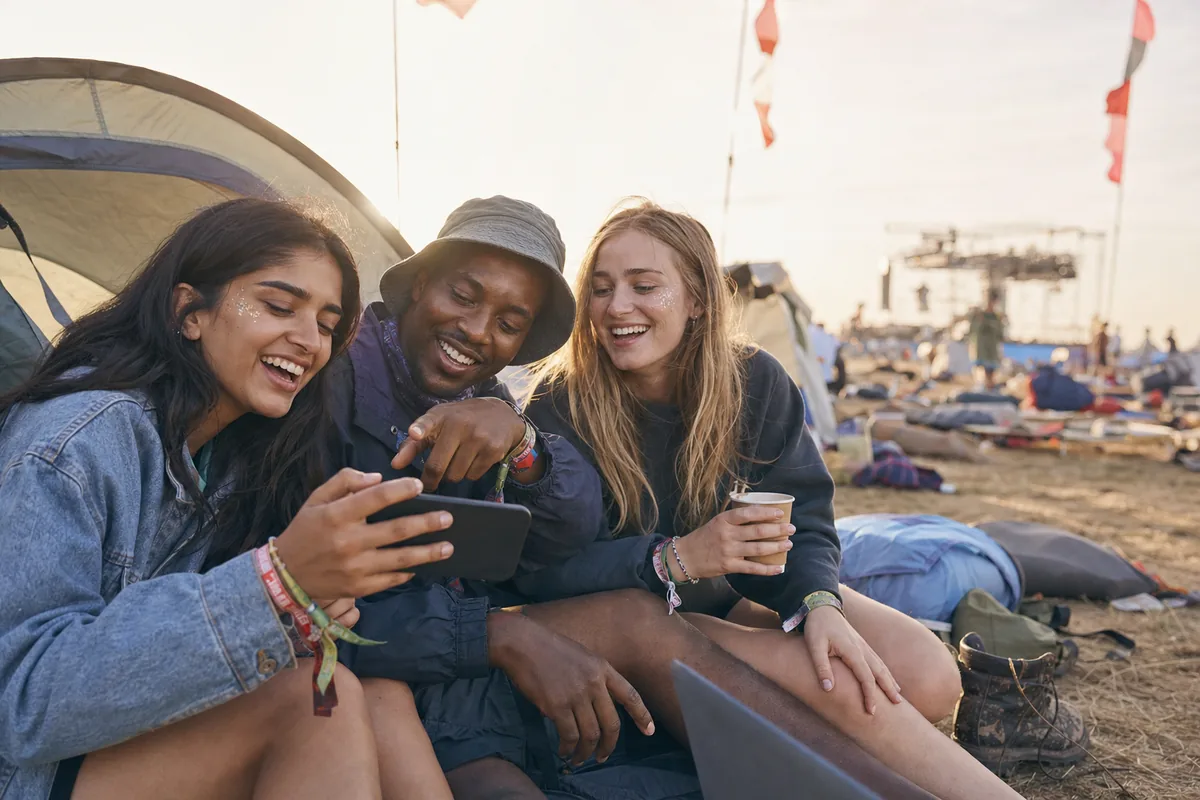
The feeling behind it has a name. An Eventbrite and Harris Poll survey (2014) found that nearly 7 in 10 millennials experience FOMO, the fear of missing out, and that feeds showing what friends are doing push people to "show up, share and engage". Someone who went sees a great photo of themselves and posts it. A friend who stayed home sees it, and next year's ticket starts to feel like the price of not missing out again.
One finding changes how you run the campaign. Research by Alixandra Barasch, Gal Zauberman and Kristin Diehl in the Journal of Consumer Research (2018) found that people who took photos in order to share them enjoyed the experience less than people who took photos for themselves, because they worried about how they would look to others.
Another strategy is to activate the sharing goal after the experience is over rather than during the experience. Alixandra Barasch, NYU Stern, on the 2018 study
For a promoter, that argues for letting people watch the headline set, then handing them professional photos once the music stops.
Why most festival photos never get shared
The photos exist. A festival photo team shoots thousands of frames a day. The problem is getting the right frame to the right person while they still care. Four things usually get in the way:
- The photos arrive late. By the time a big gallery goes live, attendees have posted their own clips and the moment has passed.
- The gallery is a haystack. One album of thousands of crowd shots means scrolling past strangers to find the one frame you are in, and most people give up.
- There is a wall in the way. An app to install or an account to create loses people on a weak signal on the walk to the car park.
- Saving is awkward. If downloading a full-size photo takes more than a tap or two, people screenshot it, and a cropped screenshot is what ends up on their story.
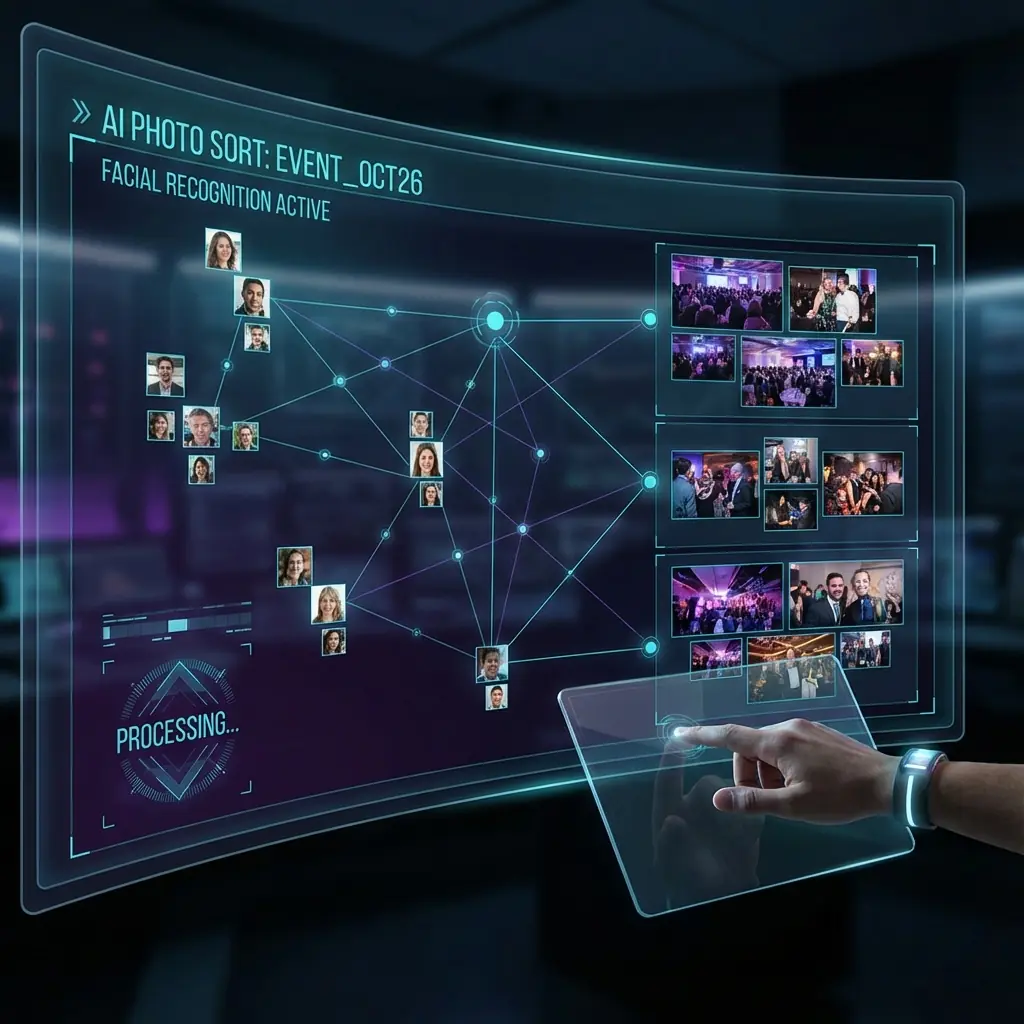
This is the part of the campaign where your delivery platform matters, and it is the problem Lenzeit is built for. In Lenzeit's public mode, an attendee opens the festival gallery link and takes a selfie, and the gallery narrows to the photos they appear in, with no app and no account. With Go Live, photographers upload during the festival, so the first day's photos can be ready before the last headliner finishes. For VIP areas or an artist guest list, the invite-only mode gives each registered guest a private gallery instead. See how the event photo delivery software works from upload to download.
The 30-day post-festival marketing timeline
The first month after the gates close has a natural shape. The first two days carry the most emotion, the first week carries the most posting, and after that people need a new reason to pay attention.
Day 0 to day 2: deliver the photos and open the returnee window
Send the gallery link the evening the festival ends or the next morning. Then send a separate offer to this year's buyers who can receive marketing email: a returnee tier with the lowest price you will offer and a clear closing date. In these first 48 hours you should have sent:
- ✓The gallery email to every ticket buyer, with one line on how to find your own photos with a selfie.
- ✓An Instagram story and a pinned post with the same link, the festival hashtag and the handle to tag.
- ✓The returnee offer email, with the price, the number of tickets at that price and the closing date.
Day 3 to day 7: amplify what attendees post
Watch the hashtag and tagged posts, and reshare the best with permission. A quick comment asking to repost respects the attendee's account and makes them feel seen. This is also the week for your recap reel.
Day 8 to day 14: give the people who stayed home a reason
Many returnees who wanted tickets will have bought by now. The next audience is people who saw the posts but did not go. Drop a first lineup hint or confirm a returning favourite, open the early-bird price to the public with its own deadline, and run paid social to people who engaged with the festival's posts. Use attendee photos as the ad creative instead of poster artwork.
Day 15 to day 30: close the early-bird tier on time
Send one last-chance email to buyers who opened the offer but did not buy, then close the tier on the date you announced. Keeping this deadline is what makes the next one believable.
How do you get attendees to share their festival photos?
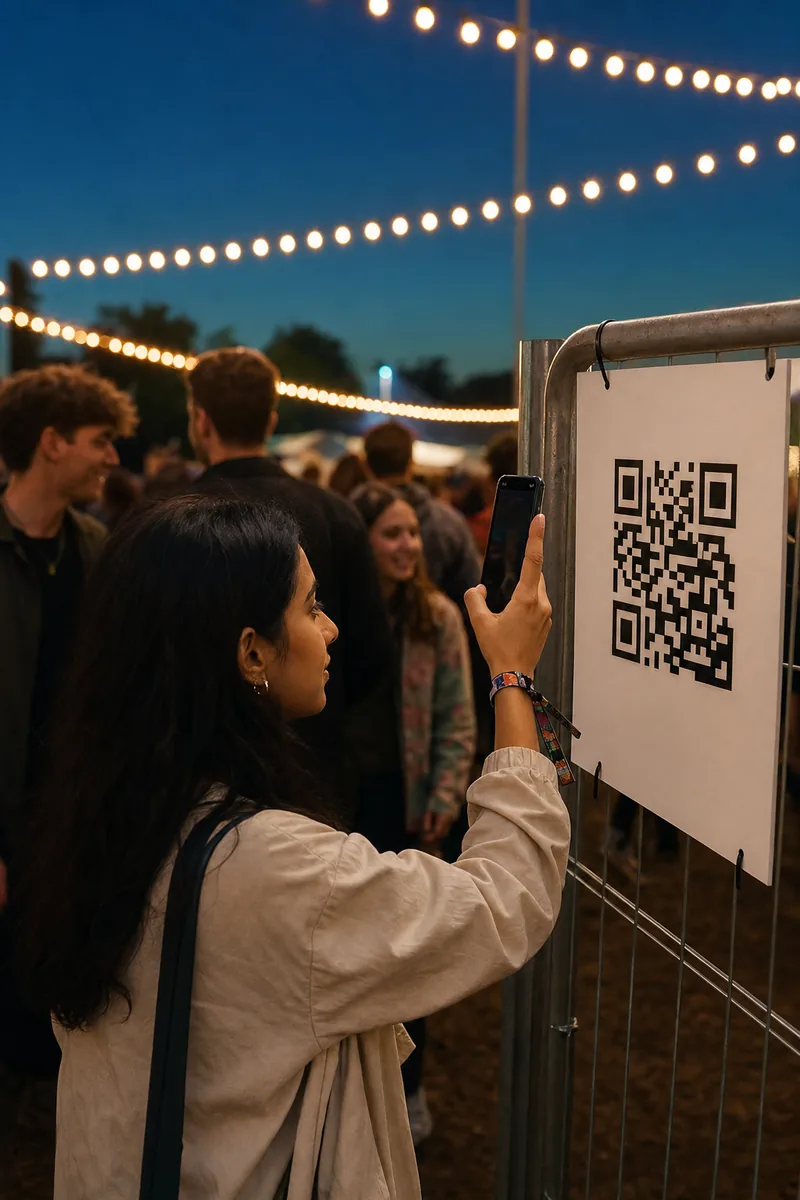
People share photos that make them look good, that are easy to share, and that they are asked to share. Cover each of these on purpose:
- Speed. The same night or the next morning, while the wristband is still on. A photo that arrives a week later competes with the attendee's own clips.
- Their own photos, not everyone's. A gallery filtered to one person by selfie search turns thousands of strangers into a handful of good shots of them.
- One-tap saving. Full-size download straight to the phone, plus a ZIP for people who want everything.
- A hashtag and a handle. Print them on the QR signs and put them in the gallery email, so posts are easy to find later.
- A prompt with a reason. "Tag the friend you are bringing next year" does more than "share your photos", and it plants the next ticket.
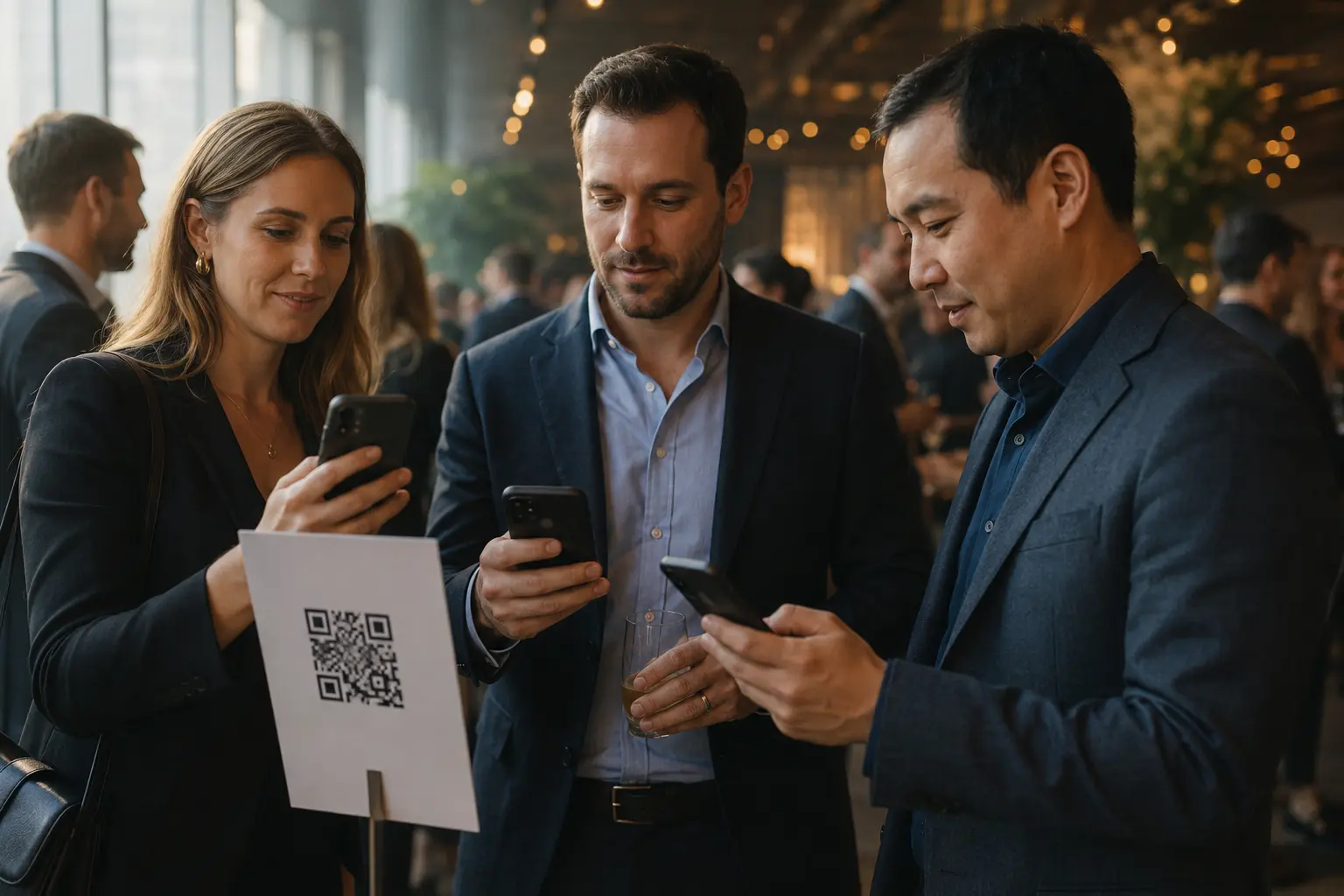
- QR codes where people wait. Exits, shuttle queues and bar lines are where attendees have a free hand and a spare minute.
Lenzeit covers the first three: the gallery link or QR code opens face search on the phone, and attendees can save single photos or a ZIP straight away. Here is how attendees receive their photos step by step. The hashtag, the prompt and the signs are yours to design.
How to measure photo shares when your gallery does not track them
What Lenzeit does not measure
Lenzeit delivers the photos. It does not track social shares, report per-attendee downloads or measure reach. Use the methods below, which work whatever gallery platform you use.
You do not need a share counter. You need to know which links and codes turned into purchases. Four ordinary methods cover most of it.
Tag every link with UTM parameters. UTM (Urchin Tracking Module) parameters are short tags added to the end of a link that tell your analytics where a visitor came from. Google Analytics recommends always setting utm_source, utm_medium and utm_campaign. Give the gallery email, the Instagram bio, each paid ad and the QR signs their own tagged link to the ticket page.
Give each channel its own early-bird code. One code for the gallery email, one for Instagram and one for TikTok shows up in your ticketing reports even when someone switches device or buys days later, which link tracking often misses.
Track the hashtag and tagged posts. Count the posts, note accounts with large followings and save the best ones. Your own posts and reels also show reach and shares in each platform's insights.
Ask buyers how they heard. One optional question at checkout, with "a friend's photos or post" as an answer, is simple but often the most honest signal you have.
To connect these numbers to what the event cost, you need a simple return on investment (ROI) model. Our guide on how to measure event ROI for a corporate gala uses the same methods for a different kind of event.
What should a festival recap reel include?
Your recap reel for Instagram and TikTok is made by your marketing team. No gallery builds it for you, and that is a good thing: the reel is where you choose the story next year's buyer will believe.
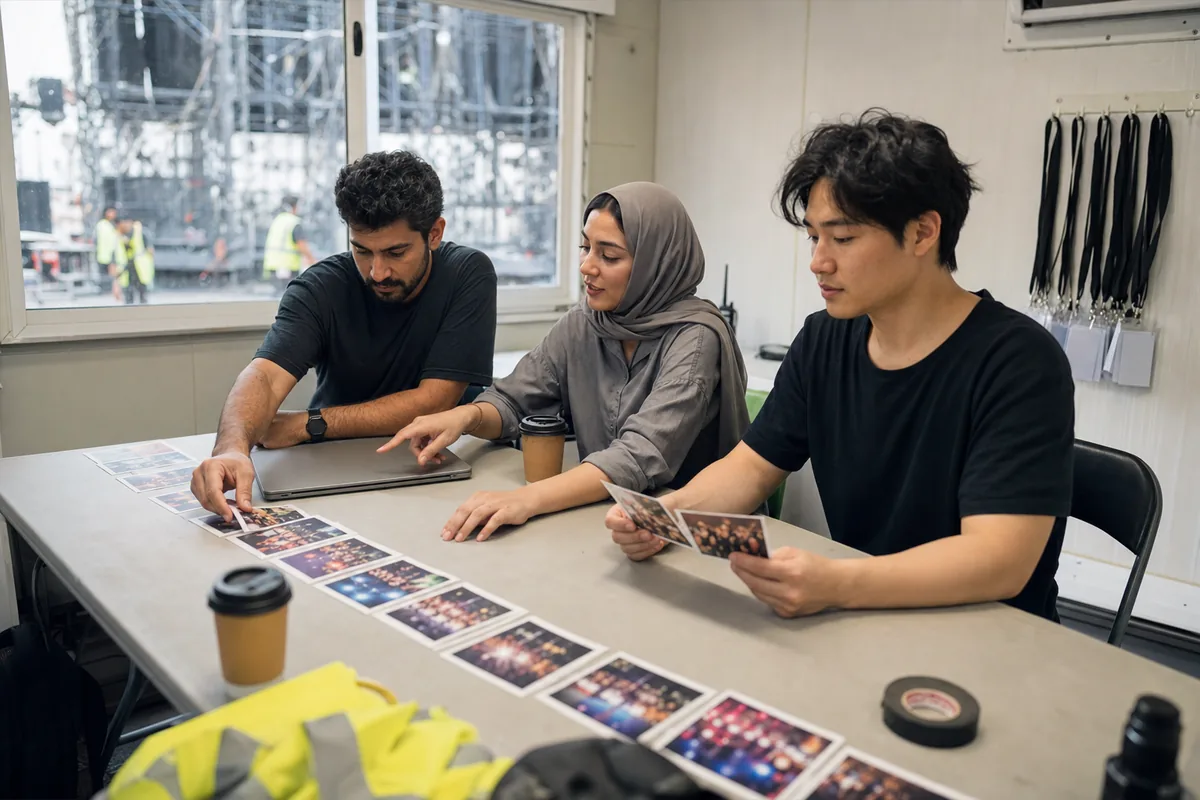
Start from the professional photos and add attendee posts you have permission to use. Faces in the crowd tend to sell the feeling of being there better than a drone shot of a stage. A simple running order for a 20 to 30 second reel:
- A close, face-level crowd moment in the first second.
- Fast cuts of friends together, more people than performers.
- One big stage moment for scale.
- The early-bird price and closing date on the last frame.
If you also plan to sell prints or photo packages, decide which photos stay free to share first, because free and easy sharing is what fuels this campaign. Our guide to how to sell festival photos covers the selling side.
How to email last year's ticket buyers without breaking the rules
Your ticket-buyer list is the most valuable list you own. The rules depend on where your buyers live, so check with your counsel, but two common frameworks show the shape.
In the US, the Federal Trade Commission's (FTC) CAN-SPAM compliance guide says marketing email needs a clear way to opt out, a valid physical postal address and a subject line that matches the message, and opt-out requests must be honoured within 10 business days. The guide lists penalties of up to $53,088 for each email that breaks the law.
In the UK, the Information Commissioner's Office (ICO) guidance on email marketing allows a "soft opt-in" for your own customers. You can email people whose details you collected when they bought from you, about similar products, if you gave them a chance to opt out at the time and give them one in every message. A bought-in list or a sponsor's list is not covered.
Keep the gallery email and the sales email apart
Sending someone their photo link is a service message. Adding a ticket offer to it can make it marketing, and the rules above then apply. The simple fix is two emails: the gallery first, then the offer with an unsubscribe link. This is general information, not legal advice.
Which early-bird mechanics turn the buzz into sales?
Demand for next year forms early. Music Business Worldwide reported that the 2026 edition of Electric Daisy Carnival had already sold out when Live Nation announced its full-year 2025 results in February 2026. Your photo campaign creates the want. The offer design decides whether people act now or wait.
- A returnee tier first. This year's buyers get the lowest price for a short window. It rewards loyalty, and their posts show others what they missed.
- A real deadline and a real cap. State the date and the number of tickets at each price, and move to the next tier when either is reached.
- Visible price steps. Publish the next tier's price so waiting has a clear cost.
- Deposits or instalments. A smaller first payment helps younger buyers commit early, if your ticketing platform supports it.
- Codes that double as tracking. The per-channel codes from the measurement section also tell you which audience bought at which tier.
Avoid fake scarcity. If you announce 500 tickets at a price and quietly sell 2,000, regulars notice, and every deadline after that carries less weight.
Set up the photo side before the gates open
Festival marketing after the event comes down to one sequence: the right photos to the right person fast, an easy way to share them, a dated offer, and links and codes that show what worked. Most of that is decided before the festival starts.
Plan the delivery with your photo team in advance: create the gallery in Lenzeit's public mode, print the QR signs, and brief the photographers to upload with Go Live during the event. Every Lenzeit account starts on the free Freemium plan with 100 free credits and no credit card, where one credit processes one photo at $0.02. Larger festivals can compare rates on the Lenzeit pricing page.