To sell festival photos, first make sure you hold the right to sell them, then sell attendees their own moments rather than stage shots, and take payment through the ticketing platform or online store you already run. The four models that work are a VIP ticket perk, paid downloads, sponsor-funded free downloads and print-on-demand. None of them works unless each fan can find themselves among tens of thousands of frames, so findability comes before pricing.
Many promoters pay a photo team for a full weekend, use a few dozen shots in next year's marketing, and leave the rest on a hard drive. The people in those photos would often pay for them. Race and youth sports photographers have sold this way for years, and the photo sales software they rely on shows that most of the work is discovery and checkout.
Who owns festival photos, and who is allowed to sell them?
Three groups have a stake in every festival photo: the photographer who made it, the artists on stage and the attendees in the crowd. Settle all three before you sell.
The photographer owns the copyright by default. Under US law, a freelancer's photos only become a work made for hire, owned by the client, when strict conditions are met, including a written agreement signed by both sides, as ASMP explains in its guide to work-for-hire contracts. More often the photographer licenses the images to the festival. Either way, the contract should say who may sell photos to attendees and how the money is split. A licence for marketing use alone does not cover selling prints.
Artists are the second limit. Touring acts often make pit photographers sign agreements that limit use to editorial coverage or ban print sales. A September 2025 explainer from the law firm Cassels notes that owning the copyright does not give unlimited use when a photo shows an artist's likeness or stage visuals. In practice, keep headliner stage shots out of anything you sell unless the artist's team has agreed in writing.
Attendees are the third. Many festivals put a photography and filming clause in the ticket terms and repeat it on signs at the gates, and Ticket Fairy's guide to festival ticket terms suggests wording for it. Selling a fan a copy of their own photo is also a very different act from putting a stranger's face in a sponsor's advert.
For adverts and anything that looks like an endorsement, lawyers at Gordon Feinblatt advise getting consent, and they flag images of children as a higher risk. Before the first sale, check that you have:
- ✓A signed photographer contract that allows sales to attendees and sets the revenue split.
- ✓A list of artists whose agreements limit commercial use, so their stage shots stay out of the store.
- ✓A photography clause in the ticket terms, shown at checkout and on signs at every entrance.
- ✓A simple way for an attendee to ask that their photos are not shared or sold.
- ✓Written releases for anyone featured in advertising, and a parent's written permission for any child.
This is not legal advice
Rules on copyright, image rights and consent differ by country, and in the United States by state. Ask your counsel to review the photographer contract and the ticket terms before you sell a single photo.
What do festival-goers actually buy?
Fans rarely pay for a wide shot of the headliner. Thousands of phones filmed the same moment, and the official stage photos often appear on the festival's social feeds for free. What a fan cannot get from their own phone is a sharp photo of themselves: arms up in the front rows, friends at sunset, a proposal beside the Ferris wheel.
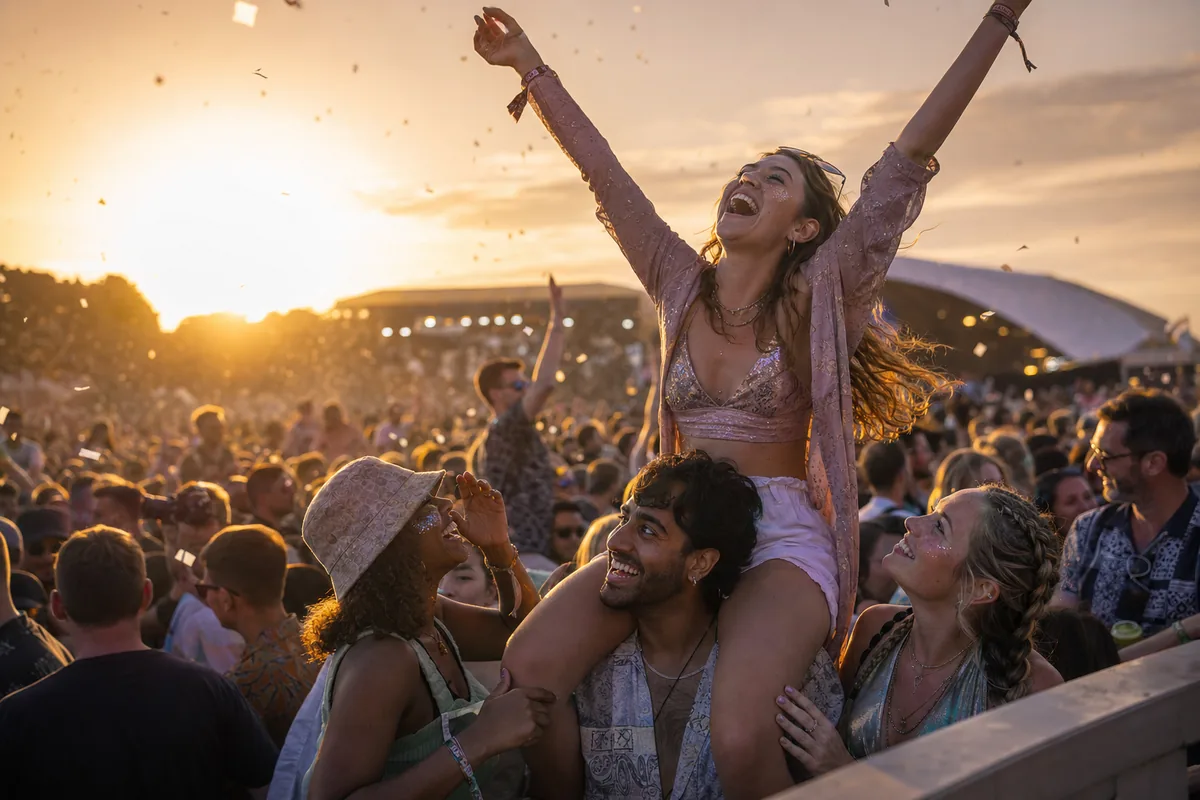
Those photos sit among tens of thousands of frames from several photographers, and nobody scrolls a gallery that size looking for one face. If fans cannot find their photos quickly, the sale never starts.
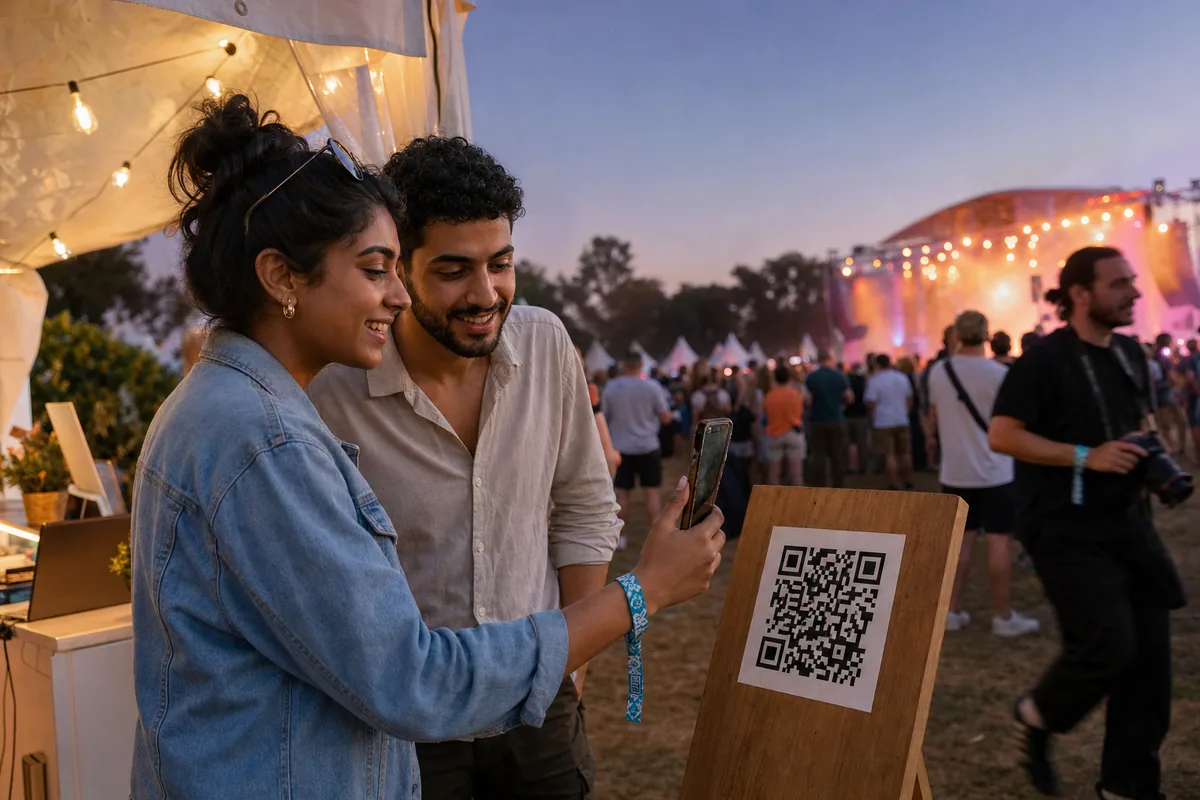
This is the part Lenzeit handles. In its public/sports mode, attendees browse the festival gallery or take a selfie so face search shows only the photos they appear in, with no app and no account. You share the gallery by link or QR code, and Go Live lets you upload during the festival so fans find photos while still on site. That is the job of event photo delivery software. Lenzeit does not take payment, so selling stays on your own systems.
Four ways to sell festival photos
Each model keeps payment on systems you already run, such as your ticketing platform or online store. Most festivals pick one or two.
1. Bundle photos into a VIP ticket tier
Add your festival photos to a VIP or premium ticket, so the photo cost is paid before the gates open. Premium extras are part of where festival spending is growing: Live Nation reported fan spending up 6 percent across its major global festivals in the third quarter of 2025, driven by concessions and premium experiences.
The perk must be something general admission does not get, such as a VIP-area photographer. For delivery, a Lenzeit secure, invite-only event lets you register VIP guests beforehand. Each one receives a unique access code by email and opens only their own matched photos, with nothing to install.
2. Pay per download or per bundle
Sell single downloads or an all-my-photos bundle through your own store, or as a paid add-on in your ticketing checkout. A bundle is easier to understand than a cart of single images.
Keep paid originals out of any gallery that anyone can download from. Previews can be web-size or watermarked copies you export from your own editing software. The full-resolution files go only to people who have paid.
3. Sponsor-funded free downloads
A sponsor pays a flat fee and every fan downloads their photos for free, with a branded frame on each image that travels wherever fans share it. Brands keep paying for this kind of onsite presence: Live Nation said its sponsorship adjusted operating income grew 11 percent to $845 million in 2025, in its full-year results.
Two cautions. Add the frame in your editing software before upload, because many delivery platforms, Lenzeit included, do not add frames for you. And agree in writing that the sponsor may not reuse attendee photos in its own adverts without releases.
4. Print-on-demand
Offer prints, posters and canvas through a print-on-demand service connected to your store. You hold no stock and pay for production only after a fan orders, as the next section explains.
How does print-on-demand work for festival photos?
Print-on-demand (POD) means a print lab makes each item only after a customer buys it, then ships it straight to that customer. Prodigi describes the model plainly: you buy no inventory, you pay when an order goes to print, and the order arrives in plain packaging so the buyer only sees your product.

Printful works the same way: the customer pays your retail price, Printful charges you for fulfilment and shipping, and the product ships under your brand. Both connect to store platforms such as Shopify and Etsy.
For a festival, the setup runs in five steps:
- Choose a lab that ships to your audience's countries, and order a sample of every product first.
- Create the products in your store, such as one print size, a poster and a canvas, each with your price.
- Connect the store to the lab through its integration, or send orders by API or by hand.
- Attach the fan's chosen photo as a full-resolution file to each order. The lab prints, packs and ships it.
- Answer customer questions yourself. The buyer sees your brand, so reprint requests come to you.
Check resolution before you offer large sizes, because a photo that looks sharp on a phone can look soft on a big canvas. Lab prices and shipping change often, so take them from each lab's current price list.
How to price festival photos: a hypothetical example
There is no standard price for festival photos. The structure below is a hypothetical example for a mid-sized weekend festival. The prices are illustrations, not benchmarks.
- Sponsor-funded: web-size photos with the sponsor's frame. Free to the fan, paid by the sponsor as a flat fee.
- Single download: one full-resolution photo for $6, bought in your store.
- All my photos: every photo the fan appears in, full resolution, for $25.
- VIP tier: the bundle plus a VIP-area photographer, included in the VIP upgrade price.
- Print: a shipped print or canvas, priced at the lab's cost plus shipping plus your margin.
Before you sell festival photos at any price, work backwards from your costs: the photo team, editing, payment fees, print lab charges and delivery. Lenzeit's delivery cost is published. One credit processes one photo, at $0.01 on the Pro plan ($9.99 a month) or $0.008 on Premium ($29.99 a month), so a festival that uploads 20,000 photos uses $200 or $160 of credits. Current Lenzeit pricing lists every plan.
Here a single download costs about a quarter of the bundle, so anyone in more than a few photos will see the bundle as the better deal. The same logic drives a school photography fundraiser on sports day, where parents buy a set of their own child's photos rather than single frames.
How to follow up by email after the festival
Your ticketing list is your best sales channel, because every address belongs to someone who was there. Send these emails from the promoter's own account rather than handing the list to the photographer or a print partner.
In the United States, the FTC's CAN-SPAM compliance guide sets the basics for commercial email: honest sender details and subject lines, a clear note that the message is an advertisement, a valid postal address, a working opt-out, and opt-outs honoured within 10 business days. CAN-SPAM does not require consent in advance, but every person keeps the right to stop the emails.
In the UK, marketing email generally needs consent. The ICO's guidance on the soft opt-in makes an exception for your own customers who bought something similar, if you offered a clear opt-out when you collected the address and offer it again in every message. Ask your counsel whether a photo offer counts as similar to a festival ticket.
A short sequence is enough:
- Day 1 or 2: your photos are ready. One gallery link, one line on how selfie search works, and the opt-out link.
- Day 5: the bundle offer, only to people who have not bought yet. Your store knows who they are.
- Day 10 to 14: prints, for fans who now want the photo on a wall, with the lab's delivery times.
- A last call only if the offer really ends on a date. Then stop.
Photo emails also sell next year's tickets when fans share what they receive. The companion guide on festival marketing after the event covers that side.
The short version
Get the rights in writing before you sell festival photos, make every fan's photos easy to find, and then choose the sales model that suits your crowd. Selling through Lenzeit itself is listed as a Pro and Premium feature marked coming soon, with no launch date, so plan this season's sales on your own store and ticketing.