An unplugged ceremony works when guests hear the request several times before the service starts: on the invitation, in the family WhatsApp group, on the programme or a sign at the door, and from the officiant just before it begins. Each time, give the reason, say when phones can come back out, and tell guests how they will get the official photos. People put their phones away far more easily when they know the photos are coming.
You want to capture the sacred moments, but Uncle Ahmed keeps stepping in front of the lens with his iPad. He is not being rude. He loves the family and wants the relatives who could not travel to see the nikah too. This guide is for families, planners, religious leaders and photographers who need to ask people like him to stop, kindly, at a nikah, church wedding, puja, Anand Karaj, bar or bat mitzvah or baptism. If the two families come from different faiths, see our guidelines for interfaith event photography as well.
What is an unplugged ceremony, and why do hosts ask for one?
An unplugged ceremony is a service where guests keep phones, tablets and cameras put away, and only the official photographer and videographer take pictures. It usually covers the ceremony itself, not the whole day.
Hosts ask for it for four practical reasons. The vows, the nikah or the laavan are a prayer, not a show, and a room of raised screens changes how that feels. Many officiants already limit photography, and the family would rather ask politely than have the priest or imam stop the service. One tablet held up in the second row blocks the view for everyone behind it. And raised phones end up in the official aisle shots, while a guest's flash can spoil the photographer's exposure of the ring exchange.
Most guests already agree with the idea. In the Pew Research Center report Americans' Views on Mobile Etiquette, published in August 2015, only 4% of American adults said it is generally acceptable to use a cellphone at church or a worship service. So asking is not rude, as long as you ask early and explain why. The real problem is that a wedding feels different from a normal service, and nobody told guests the usual rule still applies.
Check the rules of your place of worship first
Before you write a single sign, ask the officiant or venue what they already allow. Your request should match their rules, not compete with them. Rules vary a lot, even between two churches of the same denomination:
- Catholic parishes often limit where and when the photographer works. Our Lady of Grace in San Antonio, Texas allows flash only at the exchange of rings and the processions, and keeps the photographer out of the sanctuary during the ceremony.
- Church of England guidance on photography at a church wedding suggests a notice in the order of service, or a brief notice read by the vicar, if you want more control over how much of the wedding is photographed and shared.
- In traditional Jewish settings, photography is strictly forbidden on Shabbat, which affects many Saturday morning bar and bat mitzvah services. Families usually plan portraits before or after.
- Gurdwaras, mosques and temples set their own rules through their committee, imam or priest. Ask about flash, where the photographer may stand, and head coverings and shoes for everyone, including the photographer.
Ask the photographer to meet the officiant before the day too. A guide by Catholic journalist Sam Lucero on the US Conference of Catholic Bishops' marriage site says the photographer's first task is to meet the minister, ideally at the rehearsal, and talk through any limits.
Use the officiant's exact rule in your wording
If the officiant says "no flash during the vows" or "no photos during the laavan", put that rule, in those words, into your messages. A rule from the officiant is easier for guests to accept than one that sounds like a family preference.
Where to tell guests, with wording you can copy
Tell guests in more than one place, and start early. The invitation reaches organised guests, WhatsApp reaches relatives, the sign reaches late arrivals, and the officiant reaches everyone. Adjust the words to your ceremony and your elders' language.
On the invitation or wedding website
- "We would love you to be fully with us during the nikah. Please keep phones and cameras away until the ceremony ends. Our photographer will share every photo with you."
- "At the request of the church, our service is phone-free. Photos are very welcome at the reception."
In the family WhatsApp group
This is where most relatives will actually read it. Send it a week before and again the evening before: "Salaam everyone, one small request for Saturday. During the nikah, please keep your phones in your pockets. Imam sahib has asked for no photos in the prayer hall, and we want everyone's full attention on those few minutes. Our photographer is capturing everything, and each of you will get your own photos by link soon after. Phones are very welcome at the dinner."
Swap "nikah" for "the vows", "the laavan" or "the service", and the imam for your priest, pandit, granthi or rabbi.
On the programme or order of service
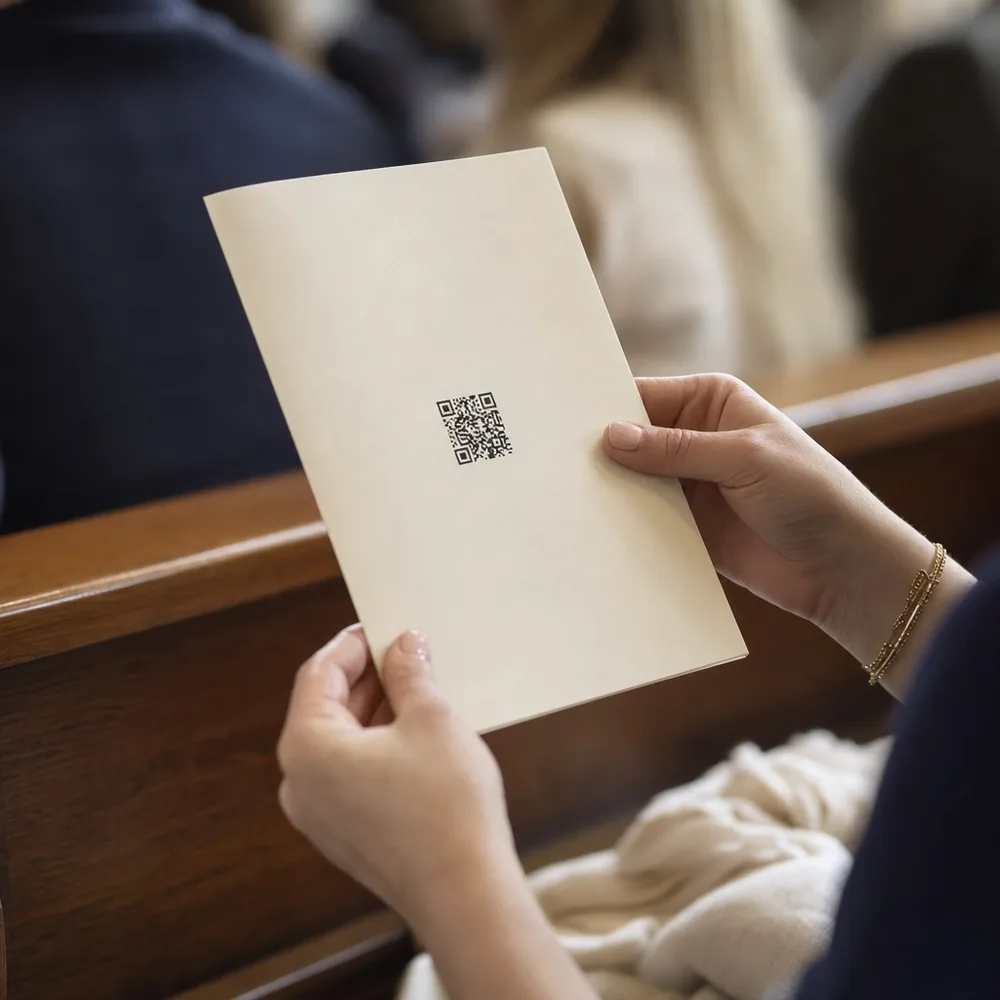
"Please silence and put away your phone for the service. You will receive the official photos: scan the code on the back of this card after the ceremony." Printing the gallery code on the back stops people scanning it during the service.
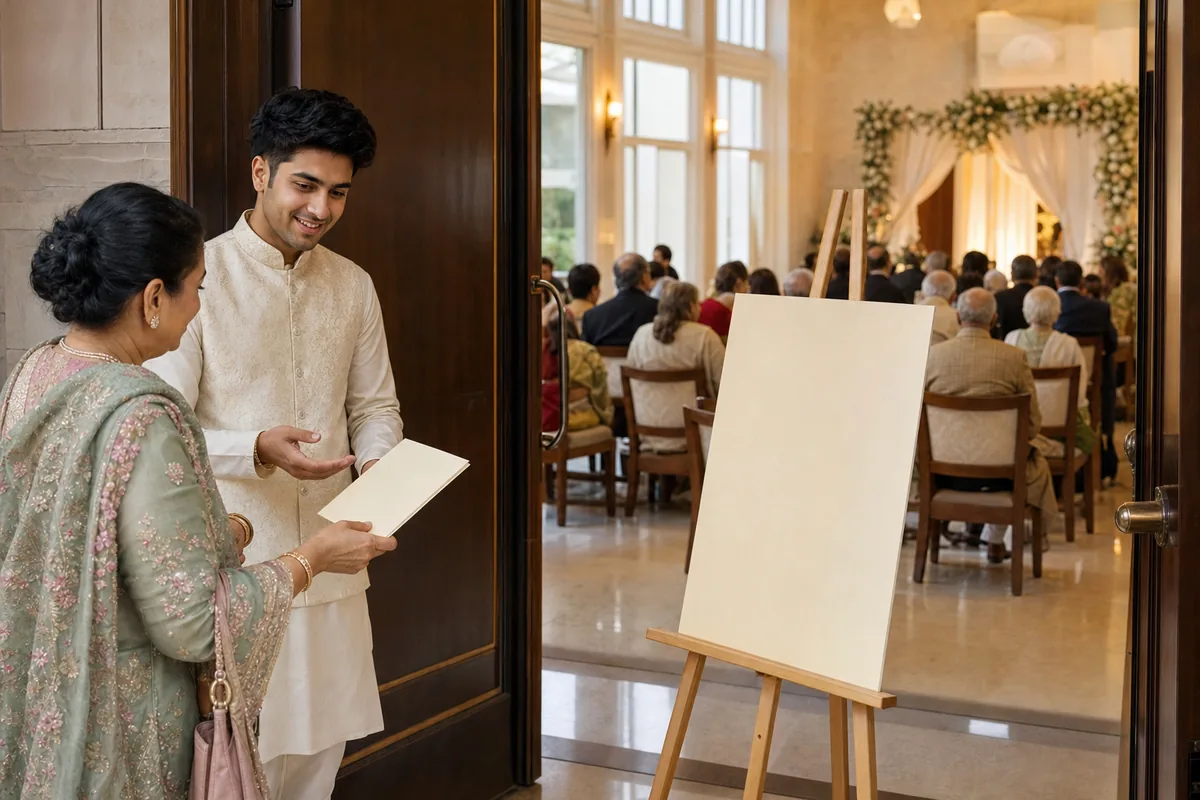
On a sign at the entrance
- "Welcome. This is a phone-free service. Please keep phones and cameras away until the end."
- "Please be here with us, not on your screen. The photos are on us."
- "No photos inside the prayer hall, please. Photos are welcome in the garden afterwards."
Put the sign at eye level where guests stop anyway, such as the guestbook table or where shoes are removed, with a smaller one at the front for late arrivals.
What the officiant can say before the service
Guests follow this reminder most, because it comes from the person leading the service: "Before we begin, the family has one small request. Please switch your phone to silent and put it away. This is a sacred moment, and they would like you to be present in it with them. Their photographer is here, and every one of you will receive the photos. When the ceremony ends, you are welcome to take as many pictures as you like."
How ushers can remind guests without making a scene
Choose ushers who know the families, such as a cousin who knows every aunt by name. A stranger asking an elder to put a phone away feels cold. A familiar face asking the same thing feels like family. Brief them before guests arrive:
- ✓Mention the request in the greeting at the door, while handing over the programme.
- ✓If someone lifts a phone during the service, stay quiet. Catch their eye, smile, and mouth "photos are coming". Then let it go.
- ✓Never take a phone from anyone's hand or argue in the aisle. That disturbs more people than the phone did.
- ✓Know exactly when phones are welcome, so the answer is "yes, right after the blessing" rather than "no".
Agree one thing with the photographer too: if a tablet appears in the aisle during the vows, the photographer works around it and the usher speaks to the guest afterwards.
How to ask elders and relatives respectfully
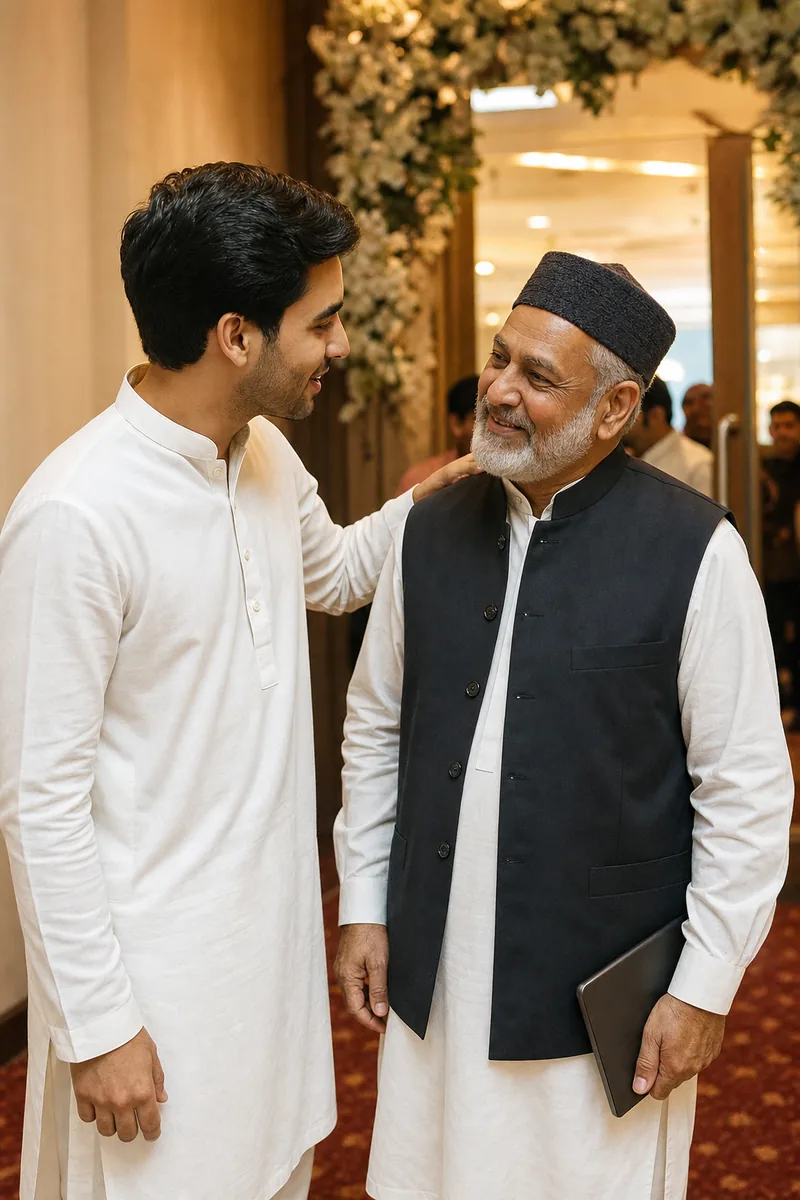
Elders who film are often the family's unofficial record keepers, sending pictures to relatives abroad as the day happens. To them the phone is an act of love, not a distraction.
Talk to them before the day, not in the aisle. A short call from the couple or a parent works better than any sign. Give the reason, then give them a role: "Uncle, everyone listens to you. Could you help us keep the phones down during the nikah?" The rule becomes something he helps with, not something done to him.
Then answer the real worry. If it is family abroad, say the photos will be shared the same day, and ask the officiant whether one fixed livestream camera is allowed. If it is "I want my own picture with the couple", promise a family photo straight after the ceremony and add it to the shot list. Keep the group message general, and never correct an elder in front of others.
Partial unplugged: phones away for the vows, welcome afterwards
A full-day phone ban is hard to hold and rarely needed. Most families only need the sacred part to be phone-free, so split the day into three zones and name them in every message:
- Phone-free: the ceremony itself, from the couple's entrance to the final blessing, dua or ardas.
- A photo moment for guests: two or three planned minutes right after the ceremony, when the couple faces everyone and the host invites guests to take pictures.
- Phones welcome: the reception, the dinner, the mehndi or sangeet, and the dance floor.
"Phones away for the nikah, cameras out for the dinner" is easier to follow than a general "unplugged wedding", and the planned photo moment gives guests the shot they wanted anyway.
The compromise: guests get the official photos quickly
Guests reach for their phones because they doubt they will ever see the official photos. Often that fear is fair: the gallery arrives weeks later as one big shared folder, and guests scroll past hundreds of strangers to find themselves. Shorten that wait and the request stops feeling like a loss.
This is where Lenzeit fits. The official photographer uploads the ceremony photos during the event with Go Live, or straight after it. Each guest then finds only the photos they appear in by taking a selfie or entering an access code, with no app to install and no account to create. Here is how guests receive their photos step by step.
For a family ceremony, the secure invite-only mode keeps the gallery to the guests you register. Each one receives a unique access code by email and sees only their own matched photos. If a guest must not appear in anyone else's photos, FaceLock™ (on the Pro and Premium plans) locks that face so photos containing it are never delivered to anyone else. Those photos are withheld, not blurred. Read more about per-face privacy controls.
That makes the promise on the programme honest: "you will get your photos, so please keep your phone away." Print the gallery QR code on the back of the programme or on the reception sign, not on the ceremony door. For the full same-day workflow, see how to deliver wedding photos to guests in real time.
Photographers, offer this as soon as a family mentions a phone-free service. Whatever event photo delivery software you use, the test is simple: can each guest find their own photos quickly, without asking you?
A checklist for the week before the ceremony
- Confirm the officiant's photo rules, including flash and where the photographer may stand.
- Send the WhatsApp message a week before, and again the evening before.
- Print the note on the programme, with the gallery QR code on the back.
- Place one sign at the entrance and a smaller one at the front.
- Brief two ushers, and agree with the photographer who handles a raised phone.
- Call the elders most likely to film, and give each a role.
- Plan the guest photo moment and tell the officiant, so the closing words can invite everyone to take pictures.
An unplugged ceremony does not take anything away from guests. It swaps a shaky phone video for a calm moment and a proper set of photos. Tell people early, give the reason, show when phones are welcome, and keep your promise about the photos.