

To measure event ROI for a corporate gala, write down two or three objectives before the event, choose one number you can actually collect for each, and report those numbers against the full cost on one page. Use the money-based ROI formula only for the parts of the gala that touch revenue, such as client relationships and sponsors. For recognition, retention and culture, report evidence against the objective instead of inventing a dollar value.
Say you spent $50,000 on the annual gala. The room was full, the awards ran on time, and the CEO looked pleased. Then the board asks a simple question: was it worth it? Many teams answer with a slideshow and a few kind emails. That is a feeling, not a result.
You are not the only one who finds this hard. Bizzabo's event ROI guide, published in August 2026, cites its 2026 State of Events benchmark: 40% of event organizers still report difficulty proving ROI. The fix is rarely a cleverer formula. It is deciding what the gala is for, then collecting the right evidence.
Event photos belong in that evidence, but as one signal among several. Below: where they fit, how to track them with ordinary tools, and how to report it all.
What the standard event ROI formula gets right, and where it breaks
The standard formula is short: Event ROI (%) = (net value minus total cost) / total cost x 100. Cvent's guide to event ROI (October 2023) uses the same idea and splits the returns into hard ones, such as revenue and leads, and soft ones, such as brand sentiment and reach.
Total cost is the easier half, as long as you are honest. Count the venue, catering, sound and lighting, entertainment, awards, printing, the photographer and videographer, travel and hotel rooms, and the staff hours spent planning. Leave out staff time and the gala looks cheaper than it was.
Net value is the hard half. Here is an example with made-up numbers. Sponsors paid $15,000 toward the night. Two client accounts that were at risk renewed after their teams attended, and the account managers value the retained margin at $50,000. If you credit all of that to the gala, net value is $65,000 and ROI is ($65,000 minus $50,000) / $50,000 x 100, which is 30%.
Look closely at the word "credit". Would those clients have renewed anyway? Some, probably. This is where the formula breaks for a gala: most of what it produces is not revenue, and the revenue it touches is shared with every sales call around it.
The ROI Methodology that Jack Phillips, Theresa Breining and Patricia Pulliam Phillips set out in Return on Investment in Meetings and Events handles this with five levels: reaction, learning, application, impact and ROI. It treats intangibles as their own step instead of forcing them into a dollar figure. For a gala, that means reporting money where the money is real, and the rest as evidence.
Do not put a dollar value on morale
If you turn "better morale" into a dollar amount with no data behind it, the first board member who asks how you got the number will undo the whole report. Keep intangibles in their own section, next to the evidence that supports them.
What is a corporate gala actually for?
Before you measure anything, decide what the gala is supposed to change. Most corporate galas serve some mix of four objectives:
- Recognition and retention. Thanking people in public, especially award winners and long-serving staff, so they feel valued and stay.
- Client relationships. Giving account teams relaxed time with key clients, which should show up later as meetings, renewals or referrals.
- Sponsor and partner value. Delivering the exposure you promised sponsors, so they return next year.
- Culture and employer brand. Creating shared moments, and photos of them, that current staff talk about and future hires see.
Recognition deserves real weight, because the research behind it is strong. In a 2024 Gallup and Workhuman study that followed nearly 3,500 employees from 2022 to 2024, well-recognized employees were 45% less likely to have left after two years. An awards night is one of the most visible moments of recognition a company runs.
Pick two or three objectives, not all four. Write each one as a sentence with a target, for example "Every nominee feels recognized in front of their peers" or "Account managers book a follow-up meeting with at least half of the invited clients within 30 days." Then get the person who reads your report to agree to that list before the event. That agreement is what makes the numbers believable later.
Which metrics should you track for each objective?
Track one metric per objective, plus a few that describe the event itself. These are the ones that hold up in front of leadership, with what each one really tells you:
- ✓Attendance against registration. Show-up rate is attendees divided by registrations, times 100. Event Marketer's 2024 special report on event measurement describes SAP tracking attendance separately from registration at its SuccessConnect event.
- ✓A post-event survey with a Net Promoter question. Ask "How likely are you to recommend this event to a colleague?" on a 0 to 10 scale. Under Bain's Net Promoter method, 9 and 10 are promoters, 0 to 6 are detractors, and the score is the promoter percentage minus the detractor percentage.
- ✓Recognition follow-through. A short survey to award winners and nominees a week later, and a check with HR on whether that group is still with the company after 12 months. Report it as evidence, since the group is small.
- ✓Client follow-ups. Meetings booked, renewals and referrals from invited clients within 30 to 90 days, tagged "gala" in your CRM (customer relationship management system).
- ✓Sponsor value. What you promised each sponsor against what you delivered, and whether they sign up again.
- ✓Social reach. Posts and mentions in the first week, counted from the event hashtag and company tags.
- ✓Photo engagement. How many attendees opened, saved and shared their event photos.
Only client follow-ups and sponsor value turn into money with any confidence. The rest are evidence for your other objectives. That is fine, as long as the report says so plainly.
Where does photo engagement fit in event ROI?
Photo engagement is useful because it is a behaviour, not an opinion. A survey asks how people felt; looking for, downloading and sharing photos shows what they did. People rarely save and share pictures of an evening they did not enjoy.
It also has clear limits. A gallery visit is a click, not a feeling. It cannot tell you whether a nominee felt recognized, and it says nothing about client renewals. Treat it as supporting evidence for recognition and culture, never as the headline number.
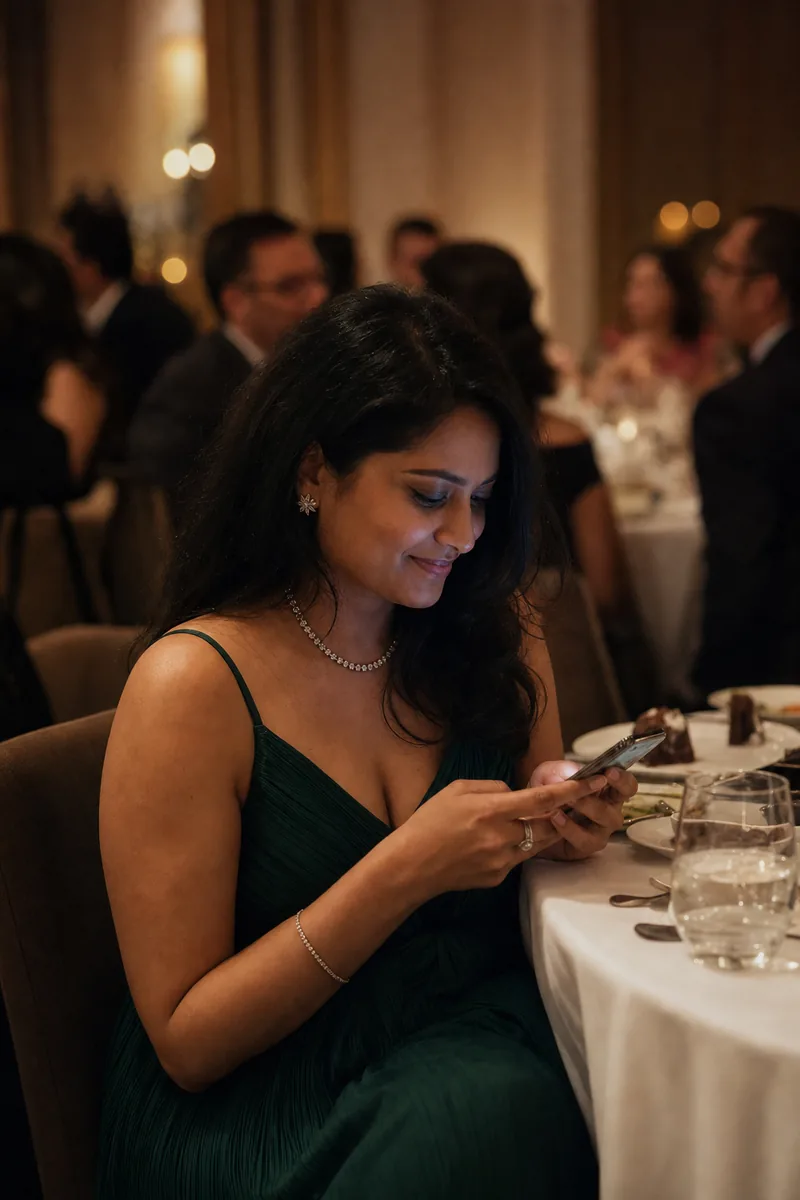
There is also a condition that is easy to miss: attendees must be able to find their own photos. If the photographer sends one shared folder of 1,500 images, many guests scroll for a minute, give up and download nothing. The engagement number then measures the folder, not the night.
So the delivery method matters before any metric does. Lenzeit, for example, groups the photos by face and gives each attendee a private gallery that holds only the photos they appear in. Guests open it from a link or a QR code with a selfie or an access code, and need no app and no account. For a fixed corporate guest list, secure mode registers guests beforehand and emails each one a unique access code. You can see how guests receive their photos step by step.
Ask your photographer before the event how and when photos will reach guests. If faster delivery adds to the quote, that is normal, because it is real extra work. Our guide for photographers on raising prices without losing clients explains their side of that trade.
How to track photo engagement when your gallery has no analytics
Many gallery platforms show little or no reporting, and Lenzeit does not currently give you download or share reports either. So put the measurement on the links you share, which you control, instead of waiting for the gallery to report it. This setup works with any platform:
- Decide what you will count before the event. For example: visits to the gallery link, downloads if your platform reports them, shares seen on social media, and survey answers.
- Tag the links that point to a page you own. If you post the gallery link on an intranet or event recap page, add UTM parameters (short tags on the end of a web address) to each link pointing there. Google Analytics' guide to URL builders says to always use utm_source, utm_medium and utm_campaign, and the results appear in the Traffic acquisition report. UTM tags only report into analytics you run, so they cannot measure a gallery page you do not own.
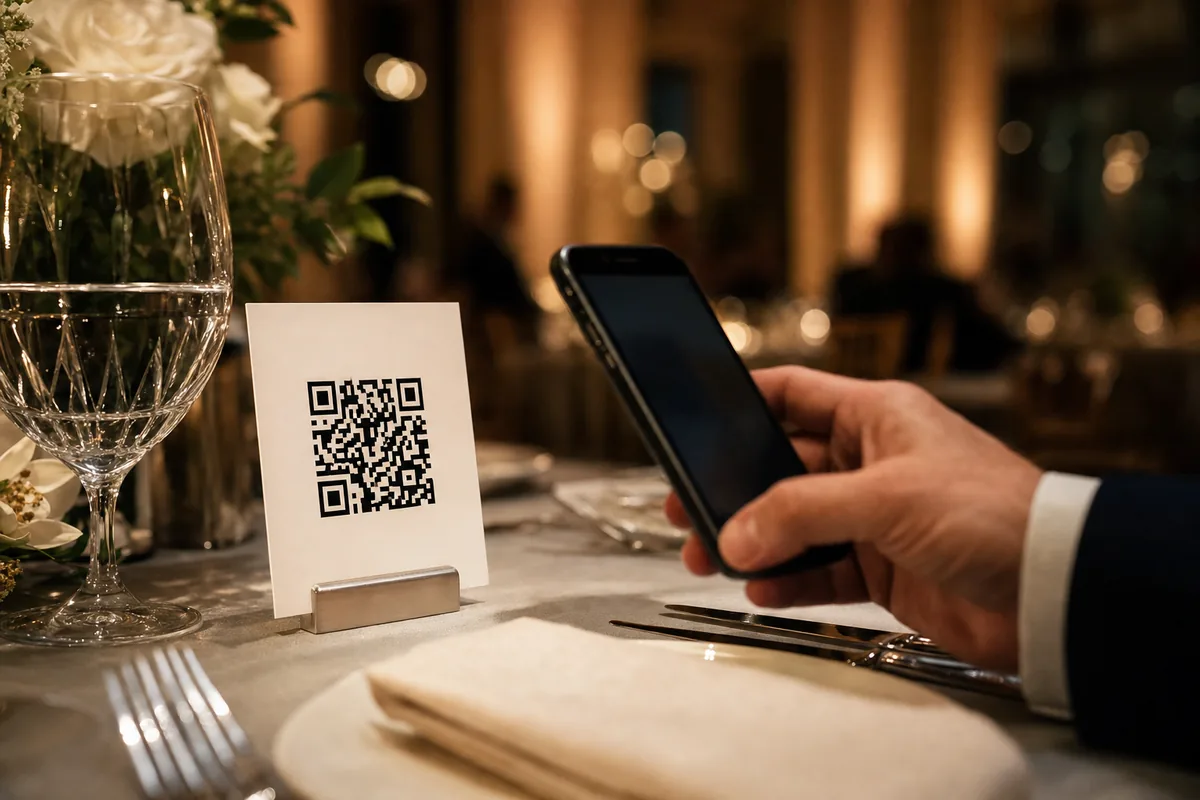
- Use a link shortener with click counts for everything else. Create one short link and one QR code per channel: the table cards, the thank-you email, the internal chat post. Each one points to the same gallery, so you can compare channels.
- Read unique clicks as devices, not people. Bitly's explanation of unique and total clicks (June 2026) notes that "unique" usually means a deduplicated device or browser, so one person on a phone and a laptop can count twice. Compare the number with attendance, but do not report it as a percentage of attendees.
- Record whatever your gallery platform shows on fixed days, such as day 7 and day 30.
- Add two questions to the post-event survey: "Did you find your photos?" and "Did you save or share any of them?" This covers what link counts cannot see.
Social mentions are the one number that needs manual work. Search the event hashtag and your company name on the platforms your staff actually use, for seven days after the event, and count the posts that include event photos. It is slow, but a board member can check it.
A QR code on each table has a second benefit: it gets photos to guests without anyone collecting email addresses at the door. Our guide on delivering event photos without email addresses walks through that setup.
Count links, not people
Link and QR counts show activity by channel. Do not use them to track which named employee opened what. And before any gala photo appears in a public employer-brand post, get the consent of the people in it. Our guide to employee photo consent for employer branding covers how.
How to measure event ROI in a one-page board report
Boards read the first lines and the numbers. Put the answer first, then objectives and results, then the money, all on one page:
- The answer in two sentences. Did the gala meet its objectives, and what did it cost?
- Objectives and results. One line per objective: the target you agreed, the metric, the result. For example: "Recognition: 42 of 45 nominees attended, and 38 of 40 survey replies said they felt recognized."
- Cost. Total cost including staff time, and cost per attendee. At $50,000 and 440 attendees, that is about $114 per person.
- Financial return, where it is real. Sponsor income and client outcomes you can trace, the ROI percentage, and a plain note on how much of each you credited to the gala.
- Evidence for the intangibles. Show-up rate, Net Promoter Score, two or three survey quotes, social mentions, and photo engagement from your tracked links.
- What changes next year. One or two decisions the numbers support, such as a smaller venue or earlier photo delivery.
Label every number with its source and the date you took it. When a board member asks where a figure came from, the answer should be one line on the page, not a follow-up email. That habit is what turns an attempt to measure event ROI into a report people trust.
Mistakes that make gala ROI numbers fall apart
The first is choosing the objectives after the event. If the goals are picked once the numbers are in, every gala looks like a success, and nobody on the board believes it.
The second is counting registrations as attendance. A 500-name guest list with 440 people in the room is an 88% show-up rate, and that gap is worth reporting rather than hiding. The third is treating photo views as satisfaction. Gallery visits support your survey results; they do not replace them.
The last is sending photos weeks later. By then the moment for sharing has passed, and a low engagement number tells you about the delay, not the evening. One broken signal makes it harder to measure event ROI honestly.
Start the measurement before the invitations go out
Most of this work happens before the gala: objectives agreed with leadership, tracked links and QR codes created, the survey drafted, and a delivery setup, whether through event photo delivery software or your photographer's own gallery, that gets every guest their photos quickly. Do those four things, and the report after the night is mostly filling in numbers.