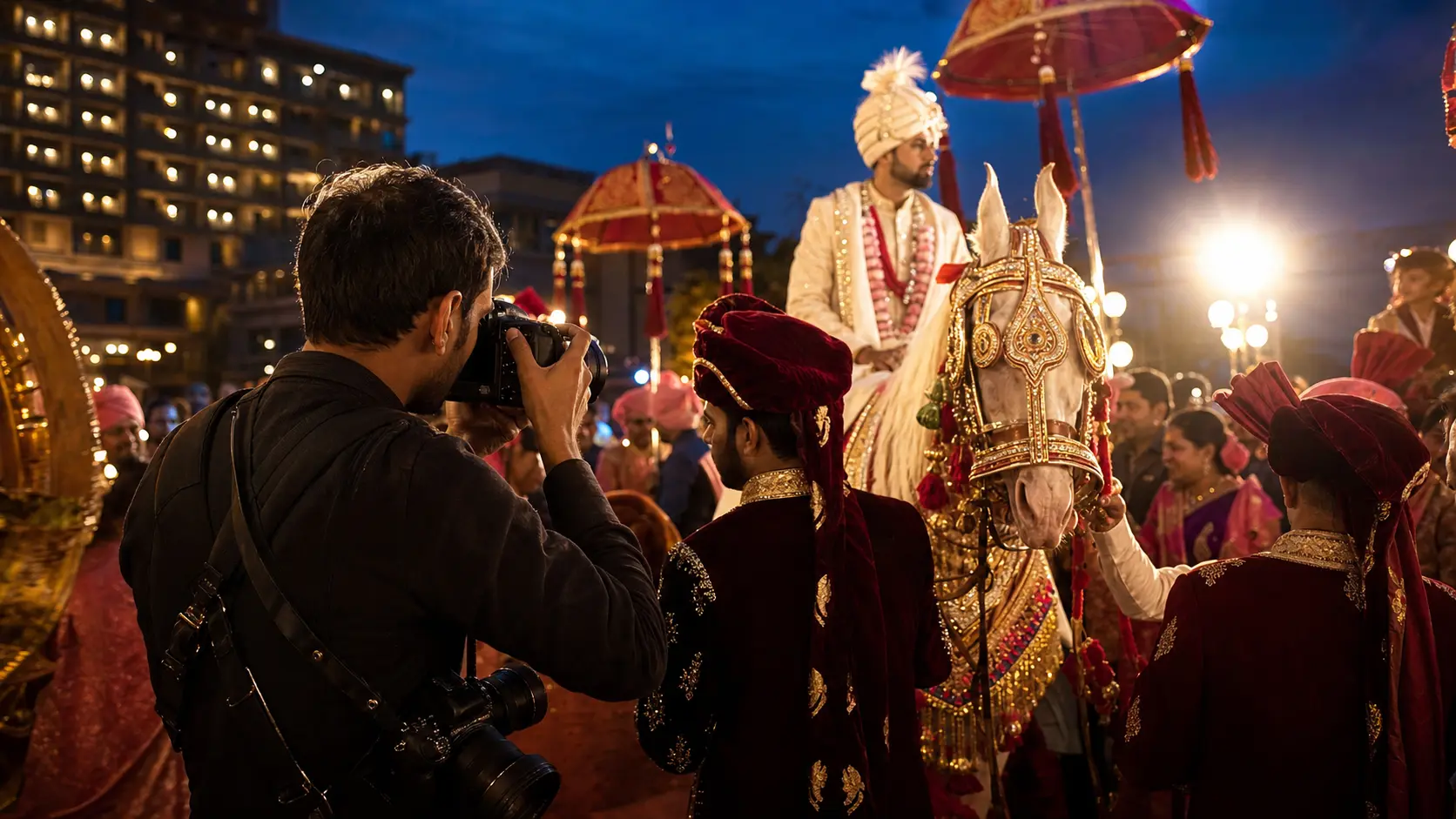

The safest way to raise photography prices is to raise them for new inquiries first, honour every contract you have already signed, and give past clients a clear date before the change reaches them. Then tie the new number to something clients can see has changed, such as guests getting their own photos during the event instead of weeks later.
This guide is for photographers who already have a client list: couples who refer their friends, planners who book you every season, and companies that bring you back for the annual dinner. Those relationships are what make a price rise feel risky. If you are still building your packages from zero, start with how to structure event photography packages and tiers, then come back here when it is time to change the numbers.
When is it time to raise your prices?
Most photographers raise their rates too late, usually after a year of feeling tired and underpaid. Any one of these signs means your current rate has stopped working for you:
- Your calendar fills before you finish marketing it. If you turn down dates in peak season, demand is higher than your price.
- Almost nobody negotiates. When every quote is accepted exactly as sent, you are probably the cheapest good option the client has seen.
- Your costs went up and your rate did not. Insurance, software, travel, second shooters and equipment all cost more over time.
- What you deliver has changed. Faster turnaround, better editing or a new way of getting photos to guests is a new product, even if your price list still shows the old one.
The cost point is the easiest to miss. In the United States, the Consumer Price Index rose 3.4 percent in the 12 months to August 2026, according to the Bureau of Labor Statistics (BLS). If you kept the same rate through that year, every client got a small real discount that you never decided to give.
Your prices should be at minimum 10% higher than they were pre-pandemic if not just for inflation. Sara France, wedding photographer, speaking to PetaPixel in 2022
San Diego wedding photographer Sara France gave that advice in a PetaPixel interview about the post-pandemic wedding rush, after a year in which her studio shot twice its usual workload because of postponed weddings. Her point still holds today: a rate that never moves is a rate that slowly falls.
How much should you raise photography prices?
No research gives one percentage that works for every photographer, so be careful with any article that promises one. A more useful question is: how many bookings could you lose before the increase costs you money?
The maths is simple. When you raise your price by a percentage, you can lose a slightly smaller share of your bookings and still earn the same revenue:
- A 10 percent increase breaks even if you lose about 9 percent of bookings, or 1 in 11.
- A 20 percent increase breaks even if you lose about 17 percent, or 1 in 6.
- A 30 percent increase breaks even if you lose about 23 percent, a little under 1 in 4.
Revenue is only half the story. Every event you no longer shoot also removes its editing hours, travel and second-shooter fee, so your profit usually improves before your revenue does. This is why a full calendar is the strongest signal of all. You can afford to lose a few bookings, and the ones you lose are more likely to be clients who chose you mainly on price.
As a floor, keep up with your own cost increases. Above that, a moderate step you can test is safer than one big jump you cannot take back. If the season ahead is already full, you have room to go further.
How to test a new price before you commit
Change the price for new inquiries only, and leave everything already signed alone. A test like this lets you raise photography prices on evidence instead of nerve, and it cannot damage a relationship you have already built.
Before you change anything, write down two numbers from the last few months: how many inquiries you received, and how many of them became bookings. Then publish the new rate on your website and in your quotes, and track the same two numbers for the next season or the next 15 to 20 inquiries, whichever comes first.
Read the result honestly. A small drop in your booking rate that stays inside your break-even number is a success. A sharp drop, or many inquiries asking the same question about price, usually means the new rate is not explained well enough yet. It does not always mean the rate is too high.
Small numbers can mislead
If you get only a handful of inquiries a month, two or three bookings either way can look like a trend. Give the test a full season before you decide, and never quote two different prices to people who might compare, such as two couples from the same family or two teams in the same company. Test over time, not between people.
How to tell past and booked clients about a price increase
The reason you give matters more than the wording. In a well-known study in the American Economic Review from 1986, Daniel Kahneman, Jack Knetsch and Richard Thaler asked people to judge everyday price changes. When a hardware store raised the price of snow shovels the morning after a snowstorm, 82 percent of respondents called it unfair. When a landlord raised the rent to cover higher costs, 75 percent called it acceptable.
People accept an increase that protects a business from rising costs. They resist one that looks like taking advantage of their need. For a photographer, "my dates are in demand" sounds like the snow shovel. "Here is what changed, and here is what it now takes to deliver it" sounds like the landlord.
Do not expect a list of your expenses to do all the work, though. A study by Lisa Bolton, Luk Warlop and Joseph Alba in the Journal of Consumer Research (2003) found that buyers underestimate inflation, assume price rises go mostly to profit, and overlook many of a seller's costs. Explaining costs made prices seem only a little fairer. So lead with what the client now gets, and mention costs in one sentence at most.
Clients who have already booked
Honour the signed price. A contract is a promise, and changing it for a wedding or a conference that is already booked costs you more in trust than it earns in money. If a booked client adds hours or services later, those additions can be charged at the new rate, as long as your contract says so.
Past clients who may book again
Tell them before they need you, not when they ask for a quote. A short, direct message with a clear date gives them a fair chance to book at the current rate, and it turns the increase into a reason to book now. One to three months of notice suits most event work, and longer suits weddings that book a year ahead.
Sample message to a past client
Hi Sana, thank you again for trusting me with your brother's wedding last winter. I wanted you to hear it from me first: my rates for new bookings will increase from 1 March. The biggest change is how photos reach your guests. Each guest now gets a private gallery with only the photos they appear in, and they can open it during the event with a selfie or a code, with no app to install. If you have a date in mind, I am happy to book it at my current rate until 1 March. Either way, I would love to work with your family again.
Notice what the message does not do. It does not apologise, it does not list expenses, and it does not hide the change inside a newsletter. It calls it an increase, gives a date, explains the change in terms of the guests, and offers one clear way to act.
Should you keep old rates for loyal clients?
Keeping a client on an old price with no end date, often called grandfathering, feels generous but stores up a problem. The gap between their rate and your real rate grows every year, and the eventual correction becomes a bigger shock than a series of small steps would have been.
Two middle paths work better for most event photographers:
- A time-limited window. Loyal clients can book at the old rate until a fixed date, as in the sample message above.
- A gentler step for regular clients. A company or agency that books you every quarter moves to the new rate over two bookings instead of one.
Whichever you choose, apply it the same way to everyone in the same group. Clients talk to each other, and a special deal for one planner soon becomes the deal every planner expects.
What to say when a returning client says "that's too expensive"
Pushback from someone who has paid you before is different from pushback from a stranger. They already know your work, so the question is not about quality. It is about why the same thing now costs more. Your job is to show that it is not the same thing, or to offer a smaller thing.
These replies usually work better than a discount:
- Restate what changed, briefly. "Last time, your guests got one shared link three weeks later. Now each guest gets their own gallery while the event is still going."
- Offer less, not cheaper. Fewer hours, one function instead of three, or no second shooter. Cutting the scope keeps your rate honest. Cutting the rate teaches every client to ask for the same.
- Let some clients go. If your break-even number allows for losing one booking in six, this one may be part of the plan rather than a failure. Thank them and leave the door open.
Give the increase a reason clients can see
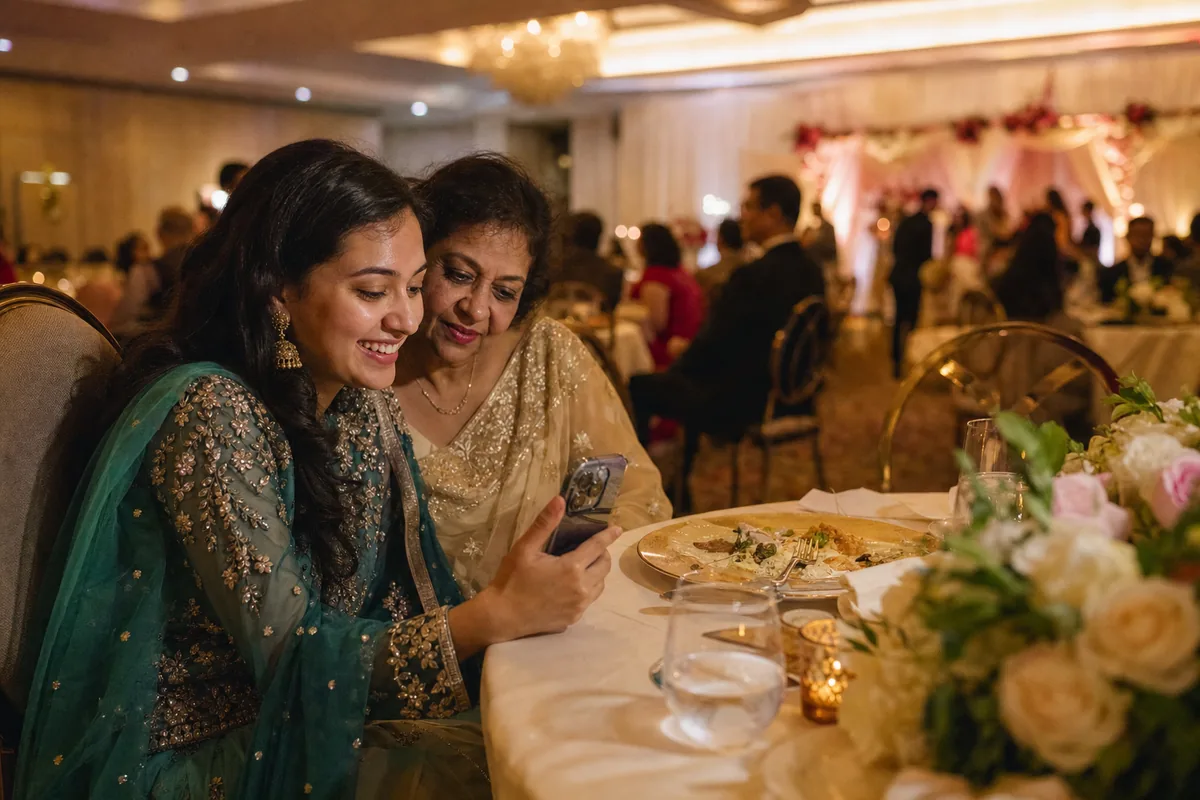
The strongest price rise is one a client can explain to someone else. "We paid more because the photographer is busy" is weak. "We paid more because every guest found their own photos during the reception" is something a couple tells their friends and a company repeats in its event report.
For event work, delivery is where the difference is easiest to see. A shared folder of 2,000 photos asks every guest to scroll past strangers to find themselves. Per-guest delivery works differently: facial recognition groups the photos by person, and each guest opens a private gallery that holds only the photos they appear in.
This is the part Lenzeit, an AI SaaS platform for event photo delivery software, is built for. You upload the whole event in bulk, the photos are grouped by face, and guests open their own gallery with a selfie or an access code, with no app and no account. With Go Live you can upload during the event, so guests start downloading while it is still happening.
Price the delivery into your package honestly. One credit processes one photo: $0.02 per photo on the free Freemium plan, $0.01 on Pro at $9.99 a month, and $0.008 on Premium at $29.99 a month. A 2,000-photo event uses $20 of credits at the Pro rate. MagicSort™, which picks the sharpest shots and removes duplicates, and FaceLock™, which locks chosen faces so those photos are never delivered to anyone else, both need Pro or Premium. Check the current plan rates before you publish your new prices.
Corporate clients often ask a harder question: what did the extra spend achieve? If that is your market, measuring the return on a corporate gala shows how to answer it with evidence.
The order that keeps good clients on side
- Check the signs: a full calendar, few negotiations, higher costs or a better deliverable.
- Choose the size of the increase from your break-even number, with your cost increases as the floor.
- Improve something the client can see, and make sure it works before you sell it.
- Publish the new rate for new inquiries and track bookings for a season.
- Honour every signed contract, and message past clients with a date and a window.
- Answer pushback with what changed or a smaller scope, never a quiet discount.
Raising your rates is mostly a question of order and honesty. When you raise photography prices for new clients first, keep your promises to booked ones and give past clients a fair window, you protect the relationships you care about. The clients who do leave are the ones your break-even sum already allowed for.