The best photo delivery workflow for Indian wedding photographers in 2026 is to upload the full multi-day shoot, let AI cull the rejects and sort every photo by the guest's face, then deliver a private gallery to each guest through a selfie or access code the same day, not six weeks later. For a 1,000-guest wedding spread across Haldi, Mehndi, Sangeet, Baraat and Reception, this is the only workflow that turns 5,000+ raw images into the right photos in the right hands without stealing your entire week.
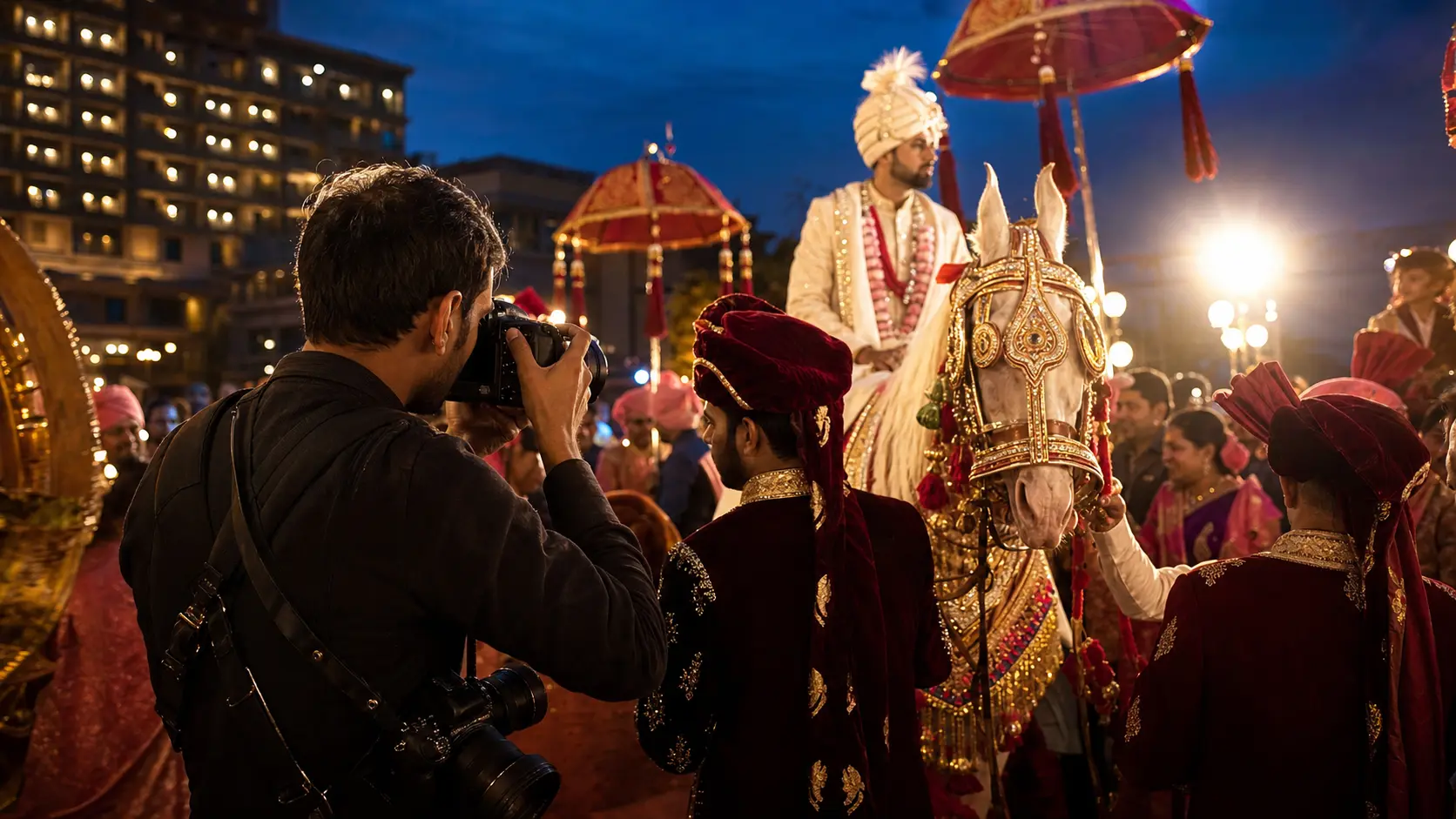
No wedding market on earth is as demanding as the Indian one. A "small" wedding is 300 guests. A big fat Indian wedding runs 3 to 5 days, multiple functions, several outfit changes per person, and two to three photographers shooting simultaneously. By the time the Vidaai is over, you are sitting on tens of thousands of frames and every aunty, cousin and college friend expects to see themselves. This guide breaks down the delivery workflow that actually scales to that reality.
Why the traditional delivery workflow breaks at an Indian wedding
The classic workflow shoot, import, cull by hand, sort into folders, upload one giant gallery, share a Google Drive or WeTransfer link was designed for a 150-photo portrait session. Scale it to a five-function wedding and every step multiplies until it collapses.
- Volume: 5,000–15,000 raw images across multiple days and multiple shooters.
- Manual culling: hours of pressing the right-arrow key through burst shots of the same Baraat entry.
- No personalization: you send one link with thousands of photos, and Guest #400 has to scroll past strangers to find the three photos of herself.
- The 'where is my photo?' flood: hundreds of WhatsApp messages from relatives asking for their pictures for weeks.
- Delayed delivery: by the time the gallery lands 6–8 weeks later, the couple has already posted phone photos and the excitement is gone.
If you send a 3,000-photo link to a guest, they will not scroll through endless folders of the couple getting ready just to find themselves at the buffet. They close the tab and you lose the social sharing that markets your studio for free.
The best 2026 workflow: cull, sort by face, deliver per guest
The modern workflow removes the two steps that eat your week manual culling and manual sorting and replaces the giant shared link with a private, face-based gallery for every single guest. Here is the end-to-end flow with Lenzeit.
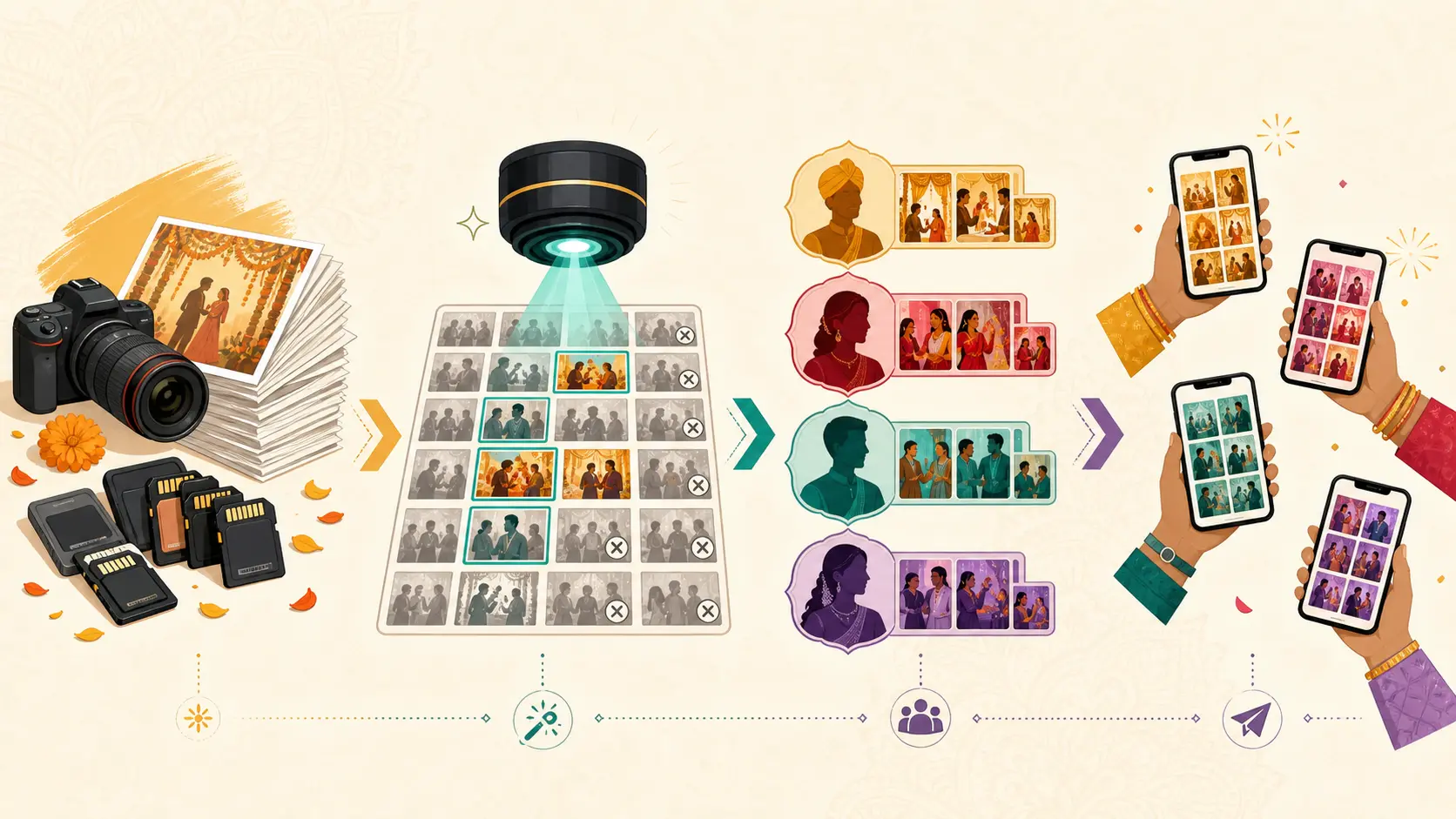
- ✓Step 1 Create the event and set privacy. Spin up one event for the whole wedding, or one per function, and choose Secure (invite-only), Private (hybrid) or Public mode. Generate a QR code for guest access.
- ✓Step 2 Bulk upload the full shoot. Dump 5,000+ high-res images from every function and every shooter. No pre-sorting required. RAW formats (CR3, ARW, NEF, RAF, DNG) are supported through cloud smart previews.
- ✓Step 3 Let MagicSort™ do the heavy lifting. The AI detects blur, missed focus and blinks, stacks near-duplicate burst frames, and groups every keeper by the person in it in minutes, not days. Learn more about MagicSort.
- ✓Step 4 Review and stay in control. MagicSort makes the first-pass selection; you can override any pick before anything goes out.
- ✓Step 5 Deliver per guest. Each guest opens a selfie or access code and instantly sees only the photos they appear in. Go Live during the Reception so guests download while the event is still trending. See how clients receive their photos.
Face search: the answer to the 1,000-guest problem
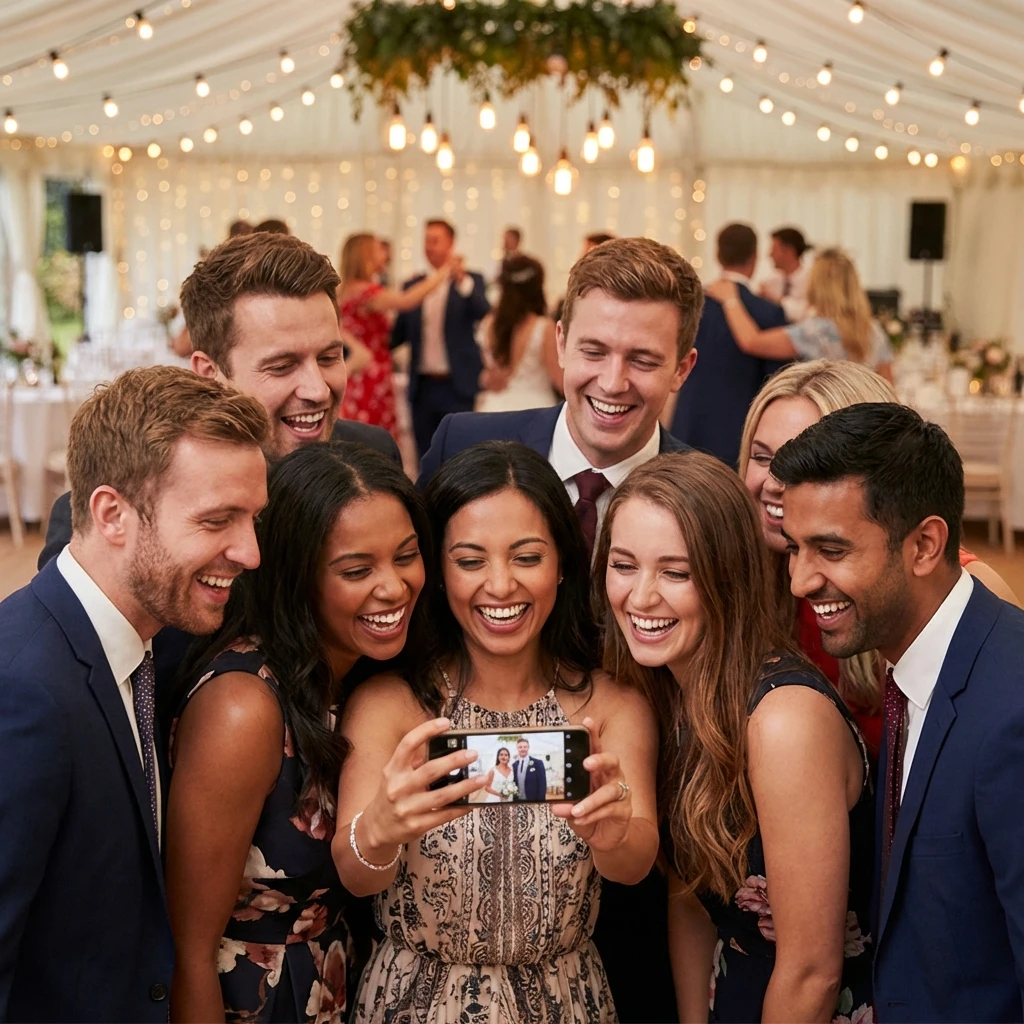
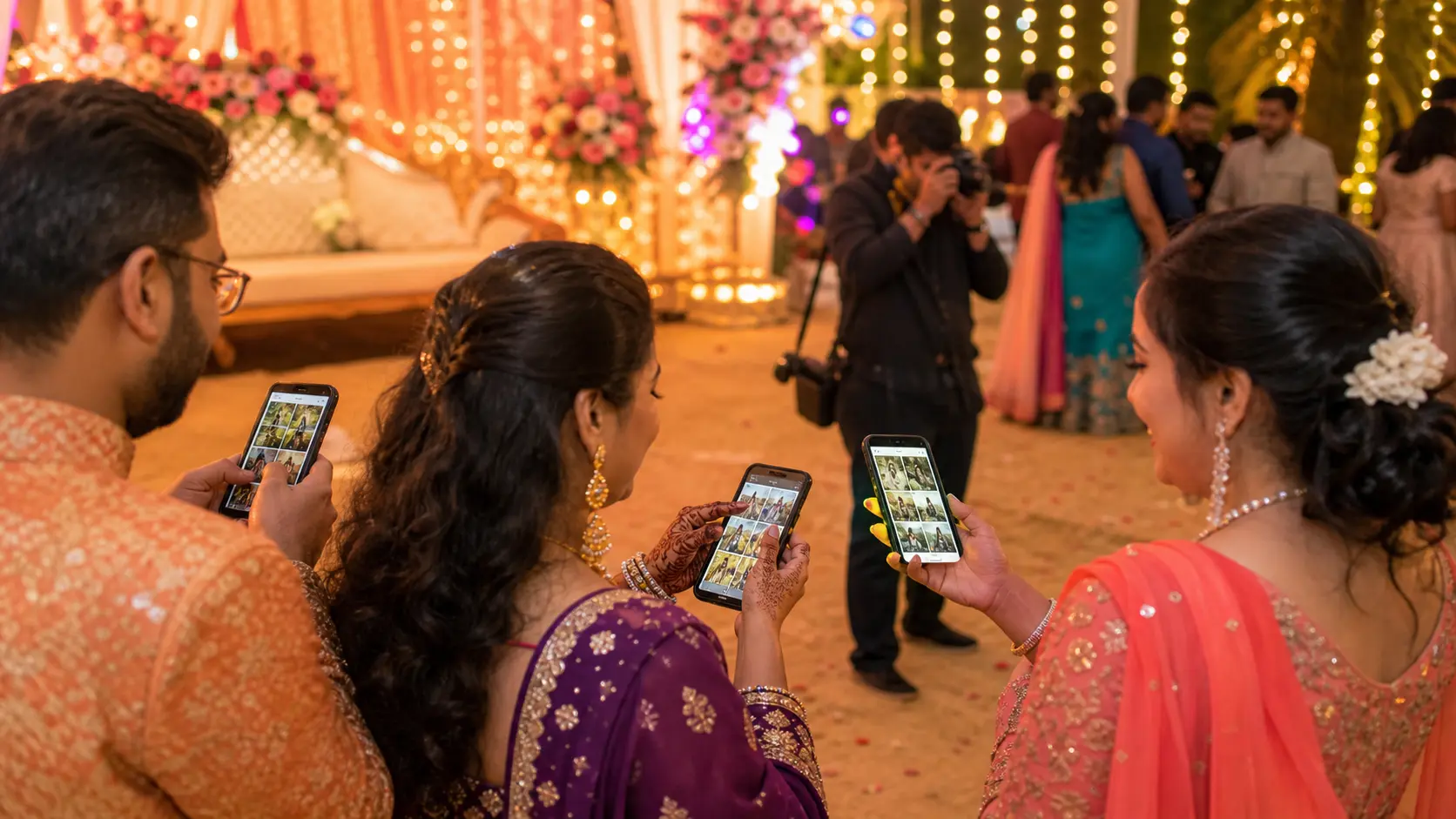
The single hardest thing about Indian wedding delivery is the guest count. Face Search solves it directly. Instead of browsing folders, a guest uploads a quick selfie, and Lenzeit scans the entire multi-day gallery Haldi, Mehndi, Sangeet, Baraat, Reception in seconds and returns only the frames they are in.
- The selfie is the key: guests do not need an account or an app, just a photo of their face.
- It works across all functions: a guest who attended only the Sangeet still finds every photo of themselves in one search.
- Every guest becomes a marketing channel: they download and share on Instagram while the wedding is still trending, and your watermark travels with the photo.
- It kills the WhatsApp flood: guests self-serve their own photos instead of messaging you for weeks.
Privacy for family functions: FaceLock™
Many Indian and South Asian weddings include private or family-only functions, and some families especially high-profile or public figures do not want certain photos circulating publicly. A single open link is a liability here. FaceLock™ turns the gallery into a zero-trust space: the link shows only a login screen, a guest must verify with a selfie, and they are granted access only to photos where their own face appears.
Set privacy per function, not per wedding
Run the public Reception as a Private or Public event so every guest can face-search their photos, but keep a private family Puja or an intimate ceremony as a FaceLock event where only registered guests get access. Same wedding, different privacy rules.
The ROI: what same-day delivery does for an Indian wedding photographer
The math is simple. If you charge a premium for a multi-day wedding but spend 30–40 hours in post culling and sorting, your real hourly rate collapses. Automating culling and delivery does two things at once: it gives you your week back, and it lets you charge more because "same-day gallery" is a premium selling point clients will pay for.
| Task | Traditional Workflow | Lenzeit Workflow | Time Saved |
|---|---|---|---|
| Culling 5,000+ multi-day photos | 6–8 hours | ~20 minutes (review only) | 7+ hours |
| Sorting guests into galleries | 4+ hours per function | 0 minutes (AI face grouping) | Hours per event |
| Answering "where's my photo?" | Days of WhatsApp | 0 minutes (self-service) | Days |
| Delivery timeline | 6–8 weeks | Same day / real-time | Weeks |
Figures are typical ranges for a multi-day, multi-shooter Indian wedding and vary by event size. The point is the shape of the change: hours and weeks become minutes.
Pricing that fits a seasonal wedding business
Indian wedding photography is seasonal, heavy in wedding season and light the rest of the year. Lenzeit charges per photo processed rather than per gigabyte stored: 1 credit sorts 1 photo, at $0.02 on the free Freemium plan or $0.01 on Pro. You get 100 free credits on signup with no card required, and credits never expire, so an unused balance carries into next season. A 3,000-photo wedding uses about 3,000 credits, which is $60 on the free plan or $30 on Pro. See Lenzeit pricing.
The delivery order that works best for Indian weddings
Upload all functions to one event, run MagicSort, review your picks, set FaceLock on private functions, then Go Live at the Reception so guests face-search and download in real time. Deliver the couple's full edited gallery afterward through your usual store.
Can you keep your current gallery and print store?
Yes. Lenzeit is the AI delivery layer, not a full CRM or print store. Many photographers use Lenzeit to cull, sort by face and get every guest their own gallery fast, and keep their existing platform for print sales, albums and bookkeeping. You add the piece that was missing automatic sorting and per-guest delivery without rebuilding your whole stack.
Conclusion: deliver at the speed of the wedding, not the speed of manual sorting
Indian weddings are the most photo-heavy events in the world, and guests expect to see themselves fast. The best 2026 delivery workflow removes the two bottlenecks manual culling and manual sorting and hands every guest their own private gallery through a selfie. You get your weekends back, guests get their moments while they still matter, and your brand travels with every shared photo.