
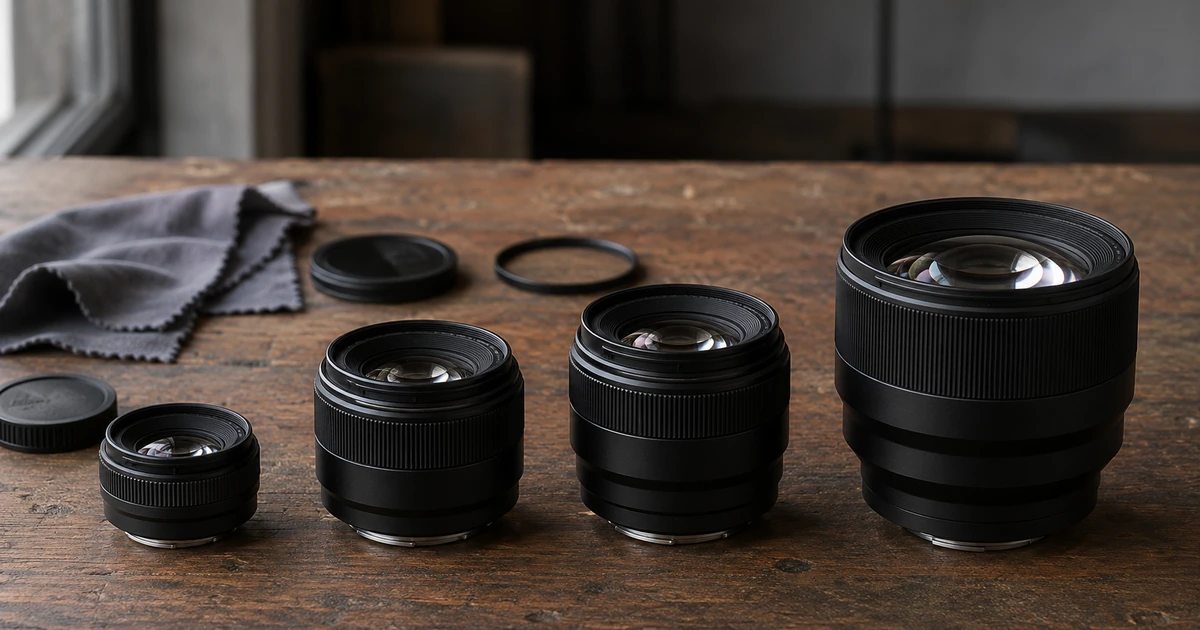
The best 50mm lens for most photographers is the cheapest one their camera mount takes. A Canon RF 50mm f/1.8 STM weighs 160g and lists at about $219. A Canon RF 50mm f/1.2L USM weighs 950g and lists at about $2,599. The f/1.2 is the better lens. It is not twelve times better, and for most people it is the wrong first purchase.
A 50mm prime is often called a nifty fifty. Shutter Muse defines the term as a cheap 50mm prime lens, usually f/1.8 or faster. The nickname stuck because these lenses are small, bright and cheap, and because 50mm sits close to the way we look at things. It is wide enough to keep some of the room in the frame, and long enough to keep a face looking normal. That is why the same focal length shows up in portrait sessions, on the street, at wedding receptions and in dim indoor halls.
This guide compares twelve current 50mm lenses across Canon RF, Sony E, Nikon Z and the L mount. Every weight, price and focusing distance comes from a published specification sheet or a manufacturer announcement, named where it appears.
Best 50mm lenses at a glance
Prices move, so this table uses price levels rather than exact figures. Weights do not move, and weight is the number most buyers ignore and then regret. Full specifications for every lens here are published on DPReview's lens database, checked on 31 August 2026.
| Lens | Mount | Weight | Best for | Price level |
|---|---|---|---|---|
| Sony FE 50mm f/1.8 | Sony E | 186g | The cheapest way into a fast fifty | $ |
| Canon RF 50mm f/1.8 STM | Canon RF | 160g | Budget, and the closest focusing of the group | $ |
| Nikon Z 50mm f/1.4 | Nikon Z | 420g | Best value on Nikon Z | $$ |
| Nikon Z 50mm f/1.8 S | Nikon Z | 415g | Edge sharpness, weather sealed | $$ |
| Sigma 50mm f/2 DG DN Contemporary | Sony E, L | 345g to 350g | Small, metal, travel and street | $$ |
| Sigma 50mm f/1.4 DG DN Art | Sony E, L | 670g | Best value f/1.4 on E and L | $$$ |
| Sony FE 50mm f/1.4 GM | Sony E | 516g | Aperture ring and 11 blades | $$$ |
| Canon RF 50mm f/1.4 L VCM | Canon RF | 580g | Photo and video hybrid work | $$$ |
| Sigma 50mm f/1.2 DG DN Art | Sony E, L | 745g | Cheapest and lightest route to f/1.2 | $$$ |
| Nikon Z 50mm f/1.2 S | Nikon Z | 1,090g | Nikon portrait work, if you can carry it | $$$$ |
| Sony FE 50mm f/1.2 GM | Sony E | 778g | Sony portrait and wedding work | $$$$ |
| Canon RF 50mm f/1.2L USM | Canon RF | 950g | Canon portrait and wedding work | $$$$ |
How this list was chosen
Four criteria, stated openly so you can disagree with them. One: the lens is current and sold new for Canon RF, Sony E, Nikon Z or the L mount. Two: its full specifications are published, so the weight and focusing distance here can be checked. Three: it is the best answer for at least one clear type of buyer, not just a good lens in general. Four: nothing was ranked on image quality that this guide has not measured, so sharpness claims are left to the review sites that test them.
Best 50mm lens for Canon
Canon's RF range covers the widest price spread of any mount here. The gap between the cheapest and the most expensive option is about $2,380.
Canon RF 50mm f/1.8 STM
At 160g this is the lightest lens in the guide, and it focuses closer than anything else here. Its minimum focusing distance is 0.30m and its maximum magnification is 0.25x, which means a subject fills a quarter of the frame at the closest setting. Every other lens in this list stops at 0.14x to 0.21x. If you photograph rings, food, details or small objects alongside people, the cheapest lens in the group is the one that gets closest.
Canon RF 50mm f/1.4 L VCM
Canon announced this in October 2024 at a suggested price of $1,399. It weighs 580g, takes 67mm filters and focuses to 0.4m. Canon built it around a voice coil motor, which is aimed at people who shoot both stills and video on the same body. If you record interviews or event video as well as photographs, this is the Canon fifty to look at.
Canon RF 50mm f/1.2L USM
950g, 77mm filters, a ten blade aperture and weather sealing. Canon portrait photographers buy it when the look matters more than the bag weight. It focuses to 0.4m and reaches only 0.19x, so it will not get you as close as the f/1.8.
For most Canon owners the honest order is simple. Buy the f/1.8 first. Move to the f/1.4 L VCM if you shoot video too. Move to the f/1.2L only when a client is paying for the difference.
Best 50mm lens for Sony
Sony has the most crowded 50mm shelf, because Sigma sells into the same mount.
- Sony FE 50mm f/1.8 is the entry point at 186g and about $198. It is an older design and focuses no closer than 0.45m, which ties it for the furthest in this guide, so it is not a details lens.
- Sony FE 50mm f/2.5 G is the compact option at 174g, with weather sealing, an aperture ring and a much closer 0.31m minimum focusing distance. You give up light to get it.
- Sony FE 50mm f/1.4 GM weighs 516g, which undercuts Sigma's f/1.4 Art by 154g. It has eleven aperture blades, an aperture ring and a 0.38m minimum focusing distance.
- Sony FE 50mm f/1.2 GM weighs 778g with weather sealing, eleven blades and a magnesium alloy body. This is the Sony portrait and wedding lens.
- Sigma 50mm f/1.4 DG DN Art and Sigma 50mm f/1.2 DG DN Art both fit Sony E, and both undercut the equivalent G Master on price.
The Sigma question is the real one for Sony owners. Sigma launched the 50mm f/1.4 DG DN Art in February 2023 at $849, well under the f/1.4 GM. So the choice on this mount is money against weight, and it is a fair trade in either direction.
Best 50mm lens for Nikon
Nikon Z has the cleanest lineup of the three, and one genuinely unusual pricing story.
The Nikkor Z 50mm f/1.8 S launched in August 2018 at a suggested price of $599.95. Six years later Nikon released the Z 50mm f/1.4, a brighter lens, a hundred dollars cheaper at launch.
Nikon set that lens at $499.95 in September 2024. It weighs 420g against the f/1.8 S at 415g, and it focuses closer, to 0.37m against 0.40m. Getting more aperture for less money is rare, and it is why the newer lens is the default pick here.
The f/1.8 S is still the sharper design on paper, with twelve elements in nine groups against ten in seven, plus weather sealing and a magnesium alloy barrel. For most Nikon owners the f/1.4 is the better buy on value. For landscape and product work where edge sharpness matters, the f/1.8 S earns its keep.
The Nikkor Z 50mm f/1.2 S is the outlier of this whole guide. At 1,090g it is 345g heavier than Sigma's f/1.2, and it takes 82mm filters. It is a superb lens and a genuine physical commitment. Handle one before you order it.
Best budget 50mm lens
The Canon RF 50mm f/1.8 STM and the Sony FE 50mm f/1.8 are the two cheapest fast fifties here, at about $219 and $198. Nikon Z owners do not have a direct equivalent, so the Z 50mm f/1.4 at $499.95 is the budget answer on that mount.
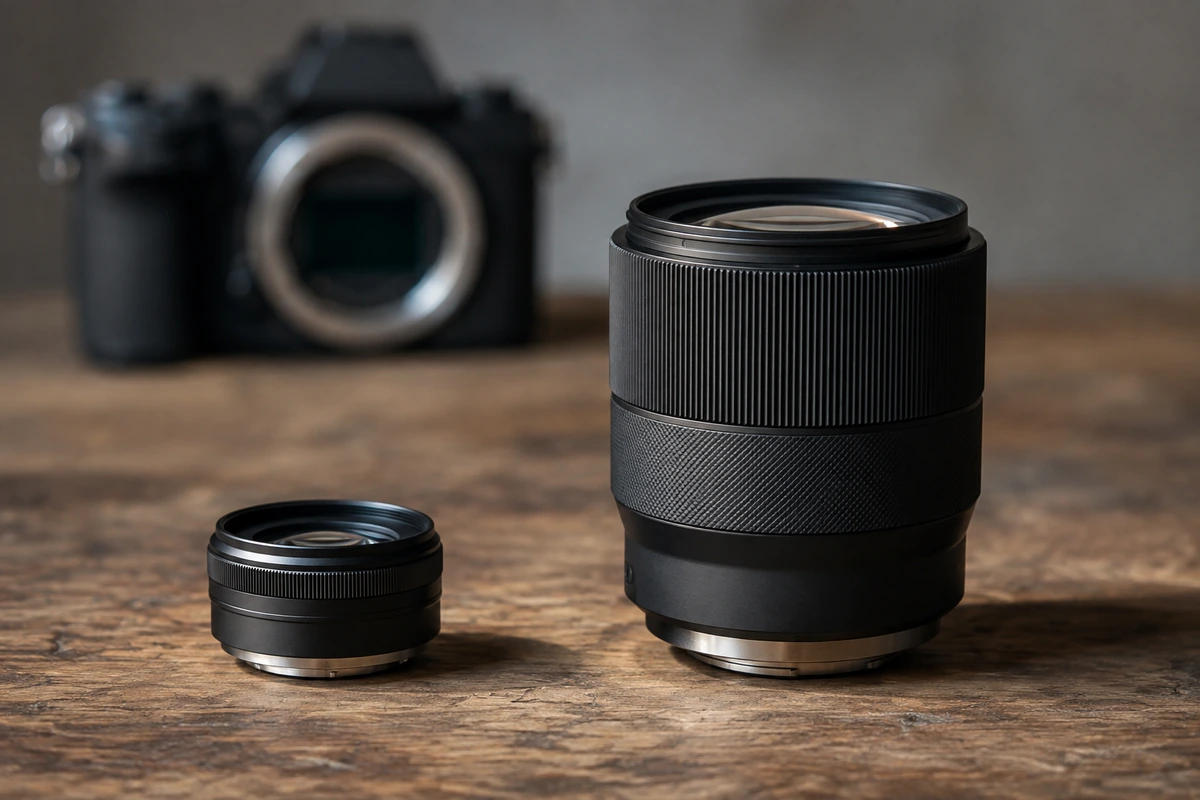
Beginners rarely need f/1.2, and the reason is not money. It is margin for error. At f/1.2 the sharp zone is thin enough that a small sway from you or your subject moves the eye out of focus. Learning to work inside that margin takes practice, and practising it on a $2,599 lens is an expensive way to learn.
There is also the weight. A 160g lens stays on the camera. A 950g lens gets left at home on the day you would have used it. The lens you actually carry takes more photographs than the lens you own.
One thing to check before you buy cheap
Filter threads differ. The Canon RF 50mm f/1.8 STM takes 43mm filters, the Sony FE 50mm f/1.8 takes 49mm, and the Nikon Z 50mm f/1.4 takes 62mm. If you already own filters, check the thread size before you order, or budget for a step-up ring.
Best 50mm lens for portrait photography

A 50mm lens works for portraits because of subject separation. That means the person stays sharp while the background falls out of focus, so the eye goes to the face instead of the furniture. Wide apertures do most of that work, and standing closer does the rest.
It is worth being accurate about how that happens, because a lot of buying advice is not. According to Cambridge in Colour, larger apertures and closer focusing distances produce a shallower depth of field, and if a subject fills the same fraction of the frame on a wide lens and a long lens, the total depth of field is close to constant. A longer lens looks like it blurs more mainly because it enlarges the background.
Minimum focusing distance matters more for portraits than most guides admit. A lens that focuses to 0.45m cannot fill the frame with a face as easily as one that focuses to 0.30m. In the group above, the Sony FE 50mm f/1.8 and the Sigma 50mm f/1.4 Art both stop at 0.45m, while the Canon RF 50mm f/1.8 STM reaches 0.30m.
One correction on autofocus. Eye detection lives in the camera body, not in the lens. A Sony A7 IV and a Nikon Z6 III find eyes with whatever lens is mounted. What the lens changes is how quickly the focus group can move to where the body asks it to go. That is why a newer lens with a linear or voice coil motor tracks a moving subject better than an older screw driven design, even on the same camera.
50mm f/1.8 vs f/1.4 vs f/1.2: what the extra money buys
The aperture numbers look close together and are not. Here is what actually changes.
| What changes | f/1.8 | f/1.4 | f/1.2 |
|---|---|---|---|
| Light gathered | Baseline | About two thirds of a stop more | Just over one stop more |
| Weight in this guide | 160g to 186g | 420g to 670g | 745g to 1,090g |
| Price level | $ | $$ to $$$ | $$$ to $$$$ |
| Background blur | Good | Slightly stronger | Strongest |
| Margin for focus error | Widest | Narrower | Narrowest |
| Right for a first lens | Almost always | Sometimes | Rarely |
The light figures are arithmetic, not opinion. Going from f/1.8 to f/1.4 gains about two thirds of a stop. Going from f/1.8 to f/1.2 gains just over one stop. Going from f/1.4 to f/1.2 gains under half a stop, which is the smallest step and the most expensive one.
In practice that means an f/1.2 lens lets you shoot at roughly half the ISO of an f/1.8 lens in the same light. That is real, and in a dark reception hall it is the difference between clean files and noisy ones. It is also about 700g of extra glass and several times the price.
Is a 50mm lens good for weddings?
Yes, and it is one of the most used focal lengths at a wedding. A fast fifty handles the two conditions that break most zooms: low light and no room to move.
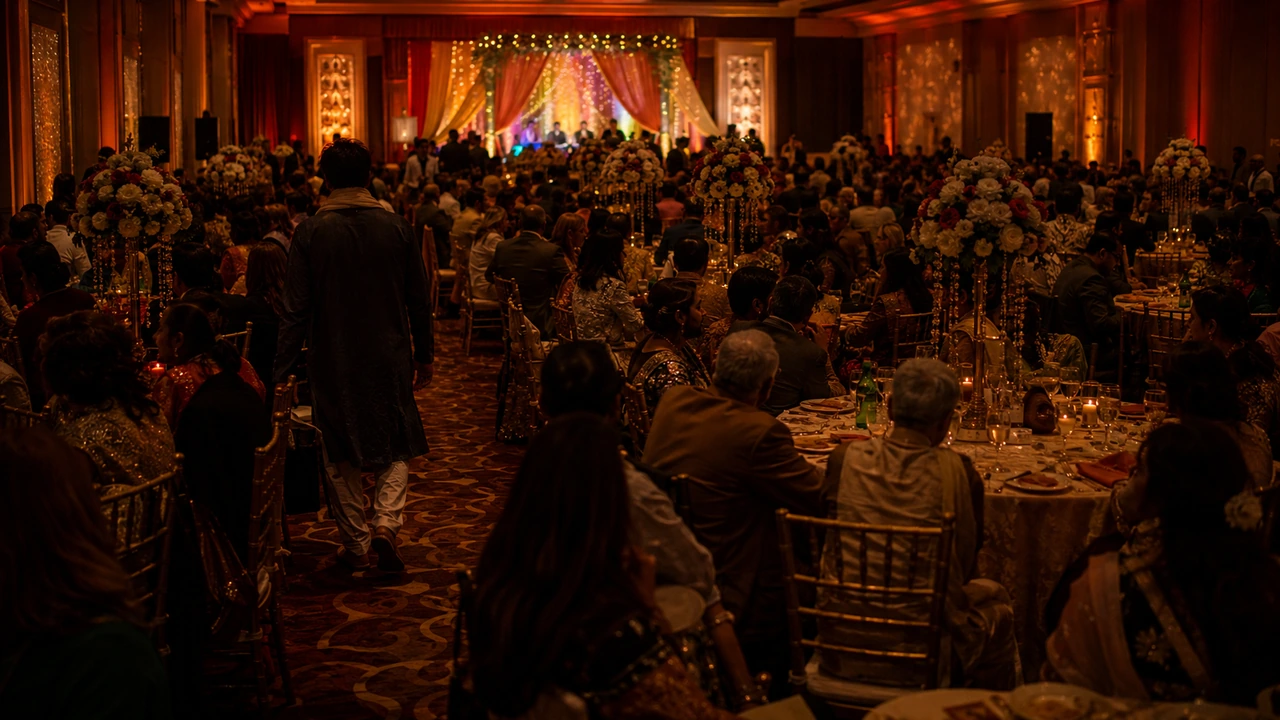
At a packed reception you cannot step back, and you cannot flash every frame without changing the mood of the room. A 50mm at f/1.4 or f/1.2 gives a usable shutter speed under warm indoor light while keeping enough of the room in frame to show where you are.
For multi day South Asian and Gulf weddings the argument is stronger, because the venues are large and the light changes between functions. A mehndi lit by string lights, a baraat in daylight and a walima under hall lighting are three different exposure problems, and one bright prime covers all three without a lens change.
The limit is honest too. A 50mm is not a ceremony lens if you are held at the back of a hall. For that you still want an 85mm or a 70-200mm. Most wedding photographers carry a fifty as one of two or three lenses, not as the only one.
Is 50mm good for street photography?
It works, but it is not the usual first choice. Most street photographers reach for 35mm, because it takes in more of the scene and lets you work closer without people noticing the camera.
A 50mm gives a tighter frame, which suits a different picture: one person, one gesture, with the street reduced to a soft background. It also lets you keep a little more distance, which some photographers find easier and others find less honest.
If you want a small lens for this, the Sigma 50mm f/2 DG DN Contemporary is worth a look. At 345g for Sony E and 350g for L mount, with a 58mm filter thread and a metal build, it is the compact option in this guide that is not also the cheapest.
Is 50mm good for beginners?
It is probably the best second lens to own, after the zoom that came with the camera.
- It costs little. Around $200 on Canon RF and Sony E buys a lens that is sharper than most kit zooms at the same price.
- It is bright. Two to three stops brighter than a kit zoom at the same focal length, which means indoor photographs without flash.
- It teaches framing. A prime does not zoom, so you move instead. Moving is what changes a photograph, and a zoom lets you avoid learning that.
- It is light enough to carry. The two cheapest lenses here weigh 160g and 186g.
The one thing to know first is that a 50mm is not wide. On full frame it is a normal view. On an APS-C body it is noticeably tight, which the questions below cover.
35mm vs 50mm: which should you buy?
Buy 35mm if you photograph places as much as people: interiors, group shots, travel, street work, and anywhere you cannot step back. Buy 50mm if the person is the picture and the room is the background.
If you are choosing between focal lengths rather than between brands, that decision deserves more room than a paragraph. Our guide to choosing between 35mm, 50mm and 85mm for portraits goes through working distance, angle of view and background blur for all three.
What a fast 50mm does to your culling pile
Here is the part of the purchase nobody mentions in a lens review. A wide aperture has a thin plane of focus, so you take more frames of each moment to be sure one of them has the eye sharp. Buy a faster lens and you quietly come home with more photographs, and with more near identical frames to compare.
That is where the work moves after you buy. Lenzeit is an AI SaaS application for event photographers that handles the part after the shutter. MagicSort groups every photo by the person in it, surfaces the sharpest shots and removes duplicates, so a folder of thousands of frames becomes person by person galleries in minutes. MagicSort and FaceLock need an active Pro or Premium plan.
Delivery works the same way. Each guest opens a private gallery holding only the photos they appear in, using a selfie or an access code, with no app and no account to create. How clients receive their photos covers that side in full.
Which 50mm should you buy?
If you own a Canon RF body, start with the RF 50mm f/1.8 STM. On Sony E, start with the FE 50mm f/1.8, or the Sigma 50mm f/1.4 Art if you already know you want f/1.4. On Nikon Z, the Z 50mm f/1.4 is the value pick and the Z 50mm f/1.8 S is the sharper one.
Move up to f/1.2 when a paying job needs it, not before. The Sigma 50mm f/1.2 DG DN Art at 745g is the lightest and cheapest way into that aperture on Sony E and L mount, which makes it the easiest f/1.2 to justify.
Before you order
Check three things: the mount, the filter thread against filters you already own, and the minimum focusing distance against the kind of pictures you actually take. The third one catches more buyers than the first two.