Good backstage photography rules rest on three controls: credential tiers that say who may shoot where, a phone policy that stops casual snaps in artist areas, and a delivery setup that keeps every backstage frame away from the public gallery until the artist team approves it. Each control closes a different route out of the building, so you need all three.
This guide is for festival and concert promoters, production managers and artist-liaison teams. Fans love a big public gallery after the show, and shared photos can help sell next year's tickets. But the same open gallery is a risk for a headliner who agreed to be photographed on stage, not in the dressing room. The rules below let both sides get what they came for.
Where do backstage photo leaks come from?
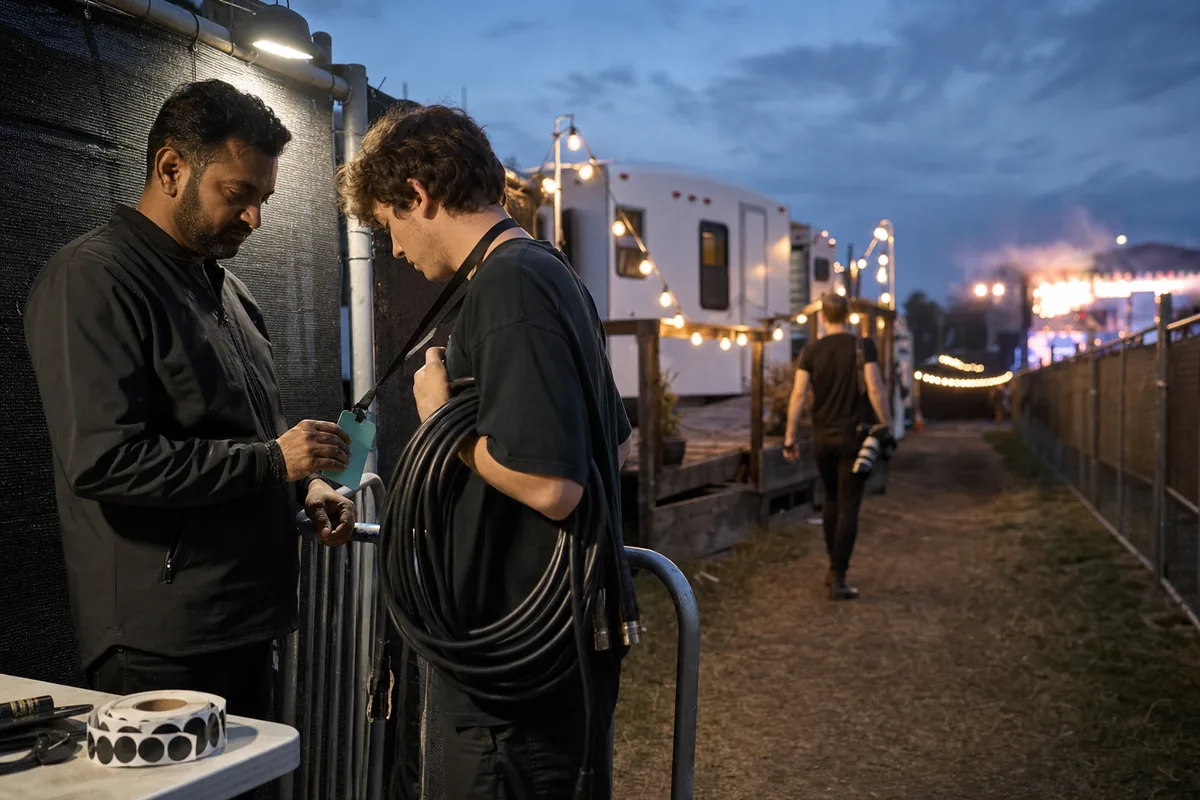
Accredited press already work under signed terms and have a pass to lose. Plan harder for the people with fewer written rules:
- Staff and crew phones. Runners, caterers, local stagehands and drivers all carry phones, and many walk past the dressing rooms.
- Guests with backstage or hospitality passes. Friends of the band, sponsor guests and competition winners are the people most likely to want a photo and least likely to have read a policy.
- Photographers outside their pass. A pit photographer who wanders into the artist compound, or a sponsor's content creator nobody briefed.
- Your own delivery. A green-room frame uploaded into the fan gallery by mistake is still a leak, even if nobody meant it.
Insider leaks are not only about photos. In January 2025, Mary J. Blige told People she fired a staff member after her tour setlist leaked, calling the setlist "the most private thing". The same route, someone on the inside with a phone, is how a backstage photo gets out.
Pulling images back after they spread rarely works. In 2013, Beyoncé's publicist asked BuzzFeed to remove "unflattering" photos from her Super Bowl halftime show. BuzzFeed published the request alongside the photos instead, and they spread across the web, as PetaPixel reported at the time. For a production office, the lesson is simple: stopping a photo before it leaves the site is the only control you fully own.
Credential tiers: who may take photos where
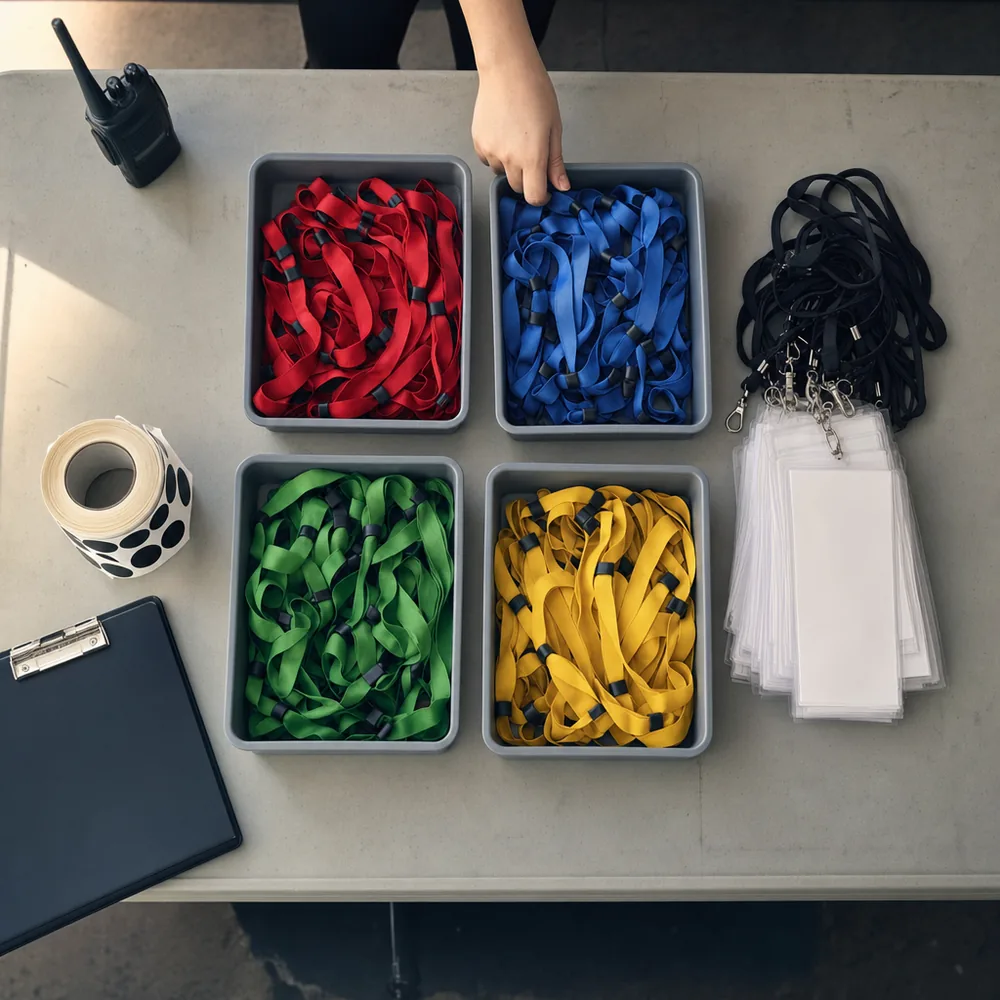
Most tours and festivals already run a tiered credential plan. The tour management company Daysheets describes the usual concert credential levels: Access All Areas (AAA), All Access (which sometimes excludes the dressing room), Backstage for production areas, Local Crew, Photo passes for the pit during set songs, and Guest wristbands. The tour manager sets the plan during the advance (the planning calls and emails before show day), and security enforces it on the day.
What plans often leave out is a camera rule for each tier. Add one line per credential, so security knows what to enforce and holders know what to expect:
- AAA: the artist's own team, including their tour photographer, who shoots for the artist and under the artist's approval.
- All Access and Backstage: work phones allowed, no photos in artist areas, and no posting from anywhere behind the stage line.
- Local Crew: phone cameras covered in artist areas. They need their hands and radios there, not their cameras.
- Photo: pit and press room only, for the songs the artist allows. No entry to the artist compound without an escort.
- Guest and hospitality: no photos past the hospitality area. At a meet-and-greet, the artist's photographer takes the picture.
Large festivals already write this down. Sziget's 2026 press rules say photography is restricted or not allowed in several areas, including "all artist spaces (backstages)". Put a line like that in your own accreditation terms, and put a simple no-camera symbol on artist-area doors so nobody has to read a policy to follow it.
If your festival runs over several days, use a different colour per day. A lost or lent pass then stops working the next morning.
Standard press rules: photo passes, the first three songs and no flash
The most common rule in live music is "first three, no flash": accredited photographers shoot from the pit for the first three songs of a set and never use flash. Digital Camera World traces the three-song rule to the 1980s, when Bruce Springsteen faced dozens of flashes from the pit. The same article notes that the band, not the venue, decides how long photographers may shoot.
Treat it as a default, not a promise. Sziget's press page says consent for the first three songs is usually given but "not automatic", and it posts artist restrictions daily at the press centre. Tell your photographers where to check each morning.
Many headline acts go further and ask photographers to sign an agreement before they get a pass. The Canadian law firm Cassels lists the usual terms in concert photo agreements: editorial use only, no print sales, artist approval of photos before release, or usage rights given to the artist.
Those terms can be strict. For the Oasis reunion show in Cardiff in July 2025, management limited press use of the photos to 12 months after first proposing one month, and the News Media Coalition lodged a formal complaint.
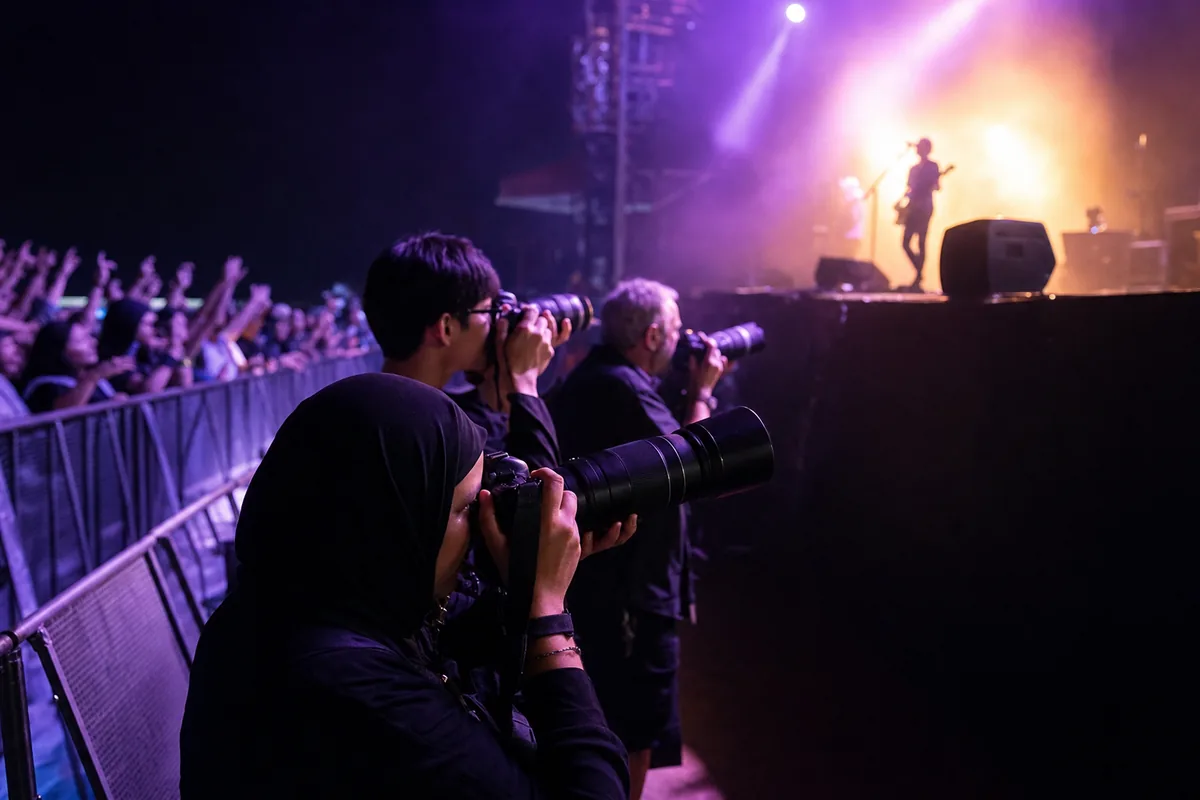
Some artists skip the press pit entirely. At Beyoncé's Croke Park show in July 2016, press photographers were barred and media were offered selected tour-photographer images instead, The Irish Times reported. If an act works this way, your press gallery becomes the place to hand out the artist's approved images, not your own photographers' work.
Artist terms come first
Your festival's photo rules are the minimum. When an artist's agreement is stricter, the artist's version applies to that set, so share it with every accredited photographer before doors open.
Backstage phone policies: lens stickers or locked pouches
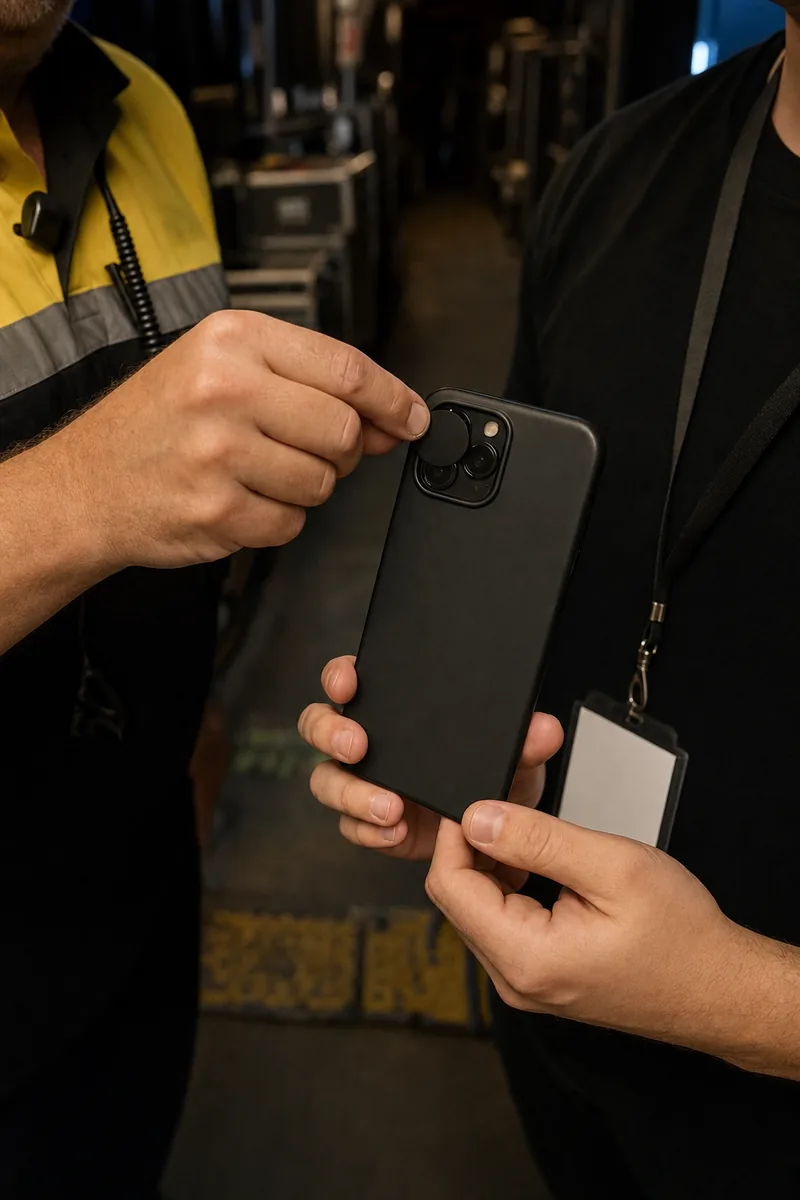
You have two practical options for phones in artist areas. The first is a sticker over the camera lens. Berlin's Berghain puts stickers over guests' phone cameras before entry and ejects anyone caught removing one, and London's FOLD asks people to cover both front and back cameras, as Mixmag reported in its round-up of no-photo clubs. Stickers are cheap and fast, but they rely on people leaving them alone.
The second option is a locked pouch. At Yondr shows, phones go into a pouch that stays with the owner and opens only in a phone-use area, according to Ticketmaster's guide to Yondr pouches. Anyone caught using a phone during the performance may be removed.
Pouches cost time. Pollstar reported in 2023 that comedians such as Dave Chappelle use them to stop jokes leaking on social media, and that arenas found the process slow, needing extra staff and earlier arrival times.
For backstage, a mix is usually practical: stickers for crew and guests at credential pickup, a pouch station at the dressing-room corridor if the artist asks, and a phone-use area for calls. Keep a way to reach a phone in an emergency, and put the rule in the advance email so nobody hears it first at the door.
Photo release forms and artist approval in the rider
Agree the photo terms during the advance, when the artist's team sends the rider (the document that lists what the act needs from you). Many riders say little about photography, so ask. Settle these points in writing:
- Who shoots. The artist's official photographer, and whether your festival photographers may shoot the set or backstage at all.
- Approval. Who approves images, how many, and how fast. A same-night turnaround is very different from "after the tour".
- Usage. Which channels may use approved images, for how long, and whether sponsors may use them.
- Embargo. The earliest date and time any image may be published.
- Meet-and-greet photos. Who takes them, and how fans receive them.
- People in the background. Crew, family members and guests who appear in backstage frames.
Release forms matter most for that last group. A performer may agree to press photos on stage, but a crew member, a band member's child or a VIP guest in a backstage frame has agreed to nothing. Get written consent before a photo of them is used for anything beyond your internal records. The rules differ by country, so check the wording with your own legal counsel. This article is not legal advice.
Some VIPs and guests have personal or religious reasons not to appear in any photo. The same respect for modesty and privacy covered in our interfaith event photography guidelines applies backstage: ask early, and brief photographers by name rather than hoping they notice.
How to keep backstage photography out of the public fan gallery
The safest rule is structural: backstage photography and fan photography never share a gallery. If a green-room frame lives in a gallery fans cannot open, one wrong click cannot send it to the whole crowd.
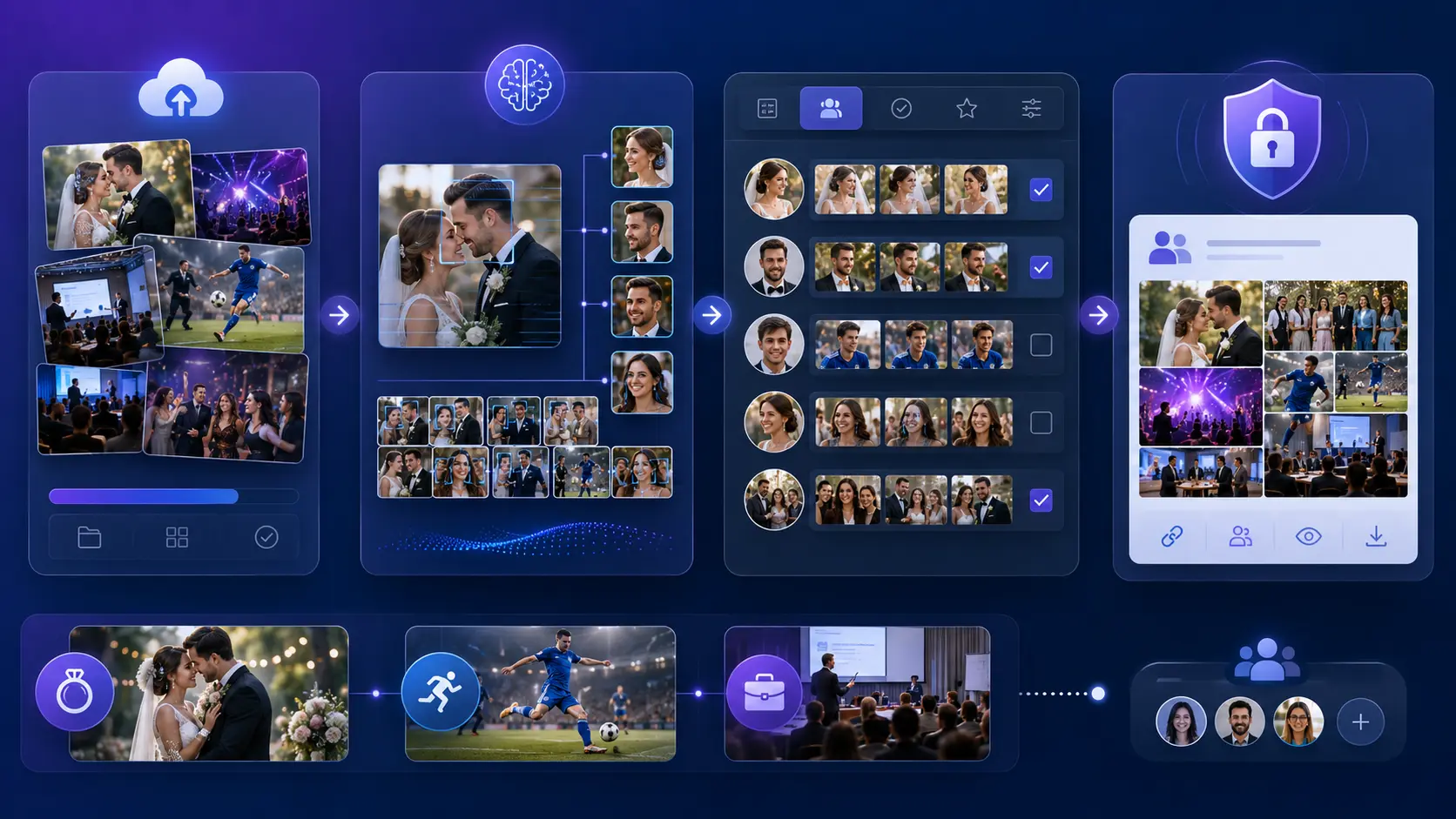
In Lenzeit, an AI SaaS platform for sorting and delivering event photos, that means one event per audience:
- Backstage event, in secure (invite-only) mode. Only people you register receive an access code, and each person sees only the photos they appear in. Invite the artist team and crew, and nobody else.
- Press event. It holds only the artist-approved selects and stays offline until the embargo lifts, as described in the next section. Treat anything you put live in a public-mode event as public.
- Public general-admission event. The fan gallery in public mode, where attendees find their own photos with a selfie or browse the set, with no app and no account.
Inside the public event, FaceLock™ adds a second layer. It locks a chosen face, such as the headliner's or a VIP guest's, so photos containing that face are never delivered to other guests. It does not blur anything: a crowd shot with the locked face in it is simply withheld. If you need a blurred version for marketing, that is a manual edit in your own editor. FaceLock needs a Pro or Premium plan.
Treat FaceLock as a safety net, not the main control. The main control is that unapproved backstage frames never reach the public event at all, so sort cards into the right event at ingest, before anyone is tired. When you compare event photo delivery software for a festival, check that it runs separate galleries with separate access, not just folders inside one gallery.
How to run a press gallery with an embargo time
An embargo is an agreed time before which nobody may publish. At a festival it can protect an artist's own announcement, a surprise guest, or a set the artist wants to post first. The embargo is a process your team runs, not a switch in any software:
- Agree the time in writing with the artist team, including the time zone, for example 21:00 CET.
- Send approvals early. Give the artist's approver a short set of selects soon after the set, not a full card.
- Keep the press event offline. Upload nothing to it, or keep it offline, until the embargo lifts.
- Publish at the embargo time. Upload the approved selects then, or use Go Live at that moment so accredited press can download them.
- Name one person who owns the release, plus a backup in case they are pulled onto stage duty.
Keep a short log of which images were approved and when each went out, so you can answer quickly if an artist's team asks where a photo came from.
Production office checklist
Print this backstage photography checklist and keep it at the credential desk.
- ✓A camera rule written for every credential tier
- ✓Artist photo terms collected during the advance and shared with every accredited photographer
- ✓Official photographers named for each act, with their pass level
- ✓Phone policy (stickers, pouches or both) in the advance email and repeated at credential pickup
- ✓No-camera symbols on artist-area doors, and a phone-use area for calls
- ✓Emergency access to phones agreed with security
- ✓Consent forms ready for crew, family and guests who may appear in backstage frames
- ✓Separate galleries: backstage (invite-only), press (offline until the embargo), public fan gallery
- ✓Artist and VIP faces locked in the public gallery if you use FaceLock
- ✓Embargo time, approver and release owner written down for each act
Backstage privacy is mostly planning done before doors open: a camera rule for every credential, a phone policy people hear in advance, and artist frames kept away from fans until the artist says yes. If you also plan to sell festival photos to fans, those rules keep the public gallery the safe part of the weekend.