
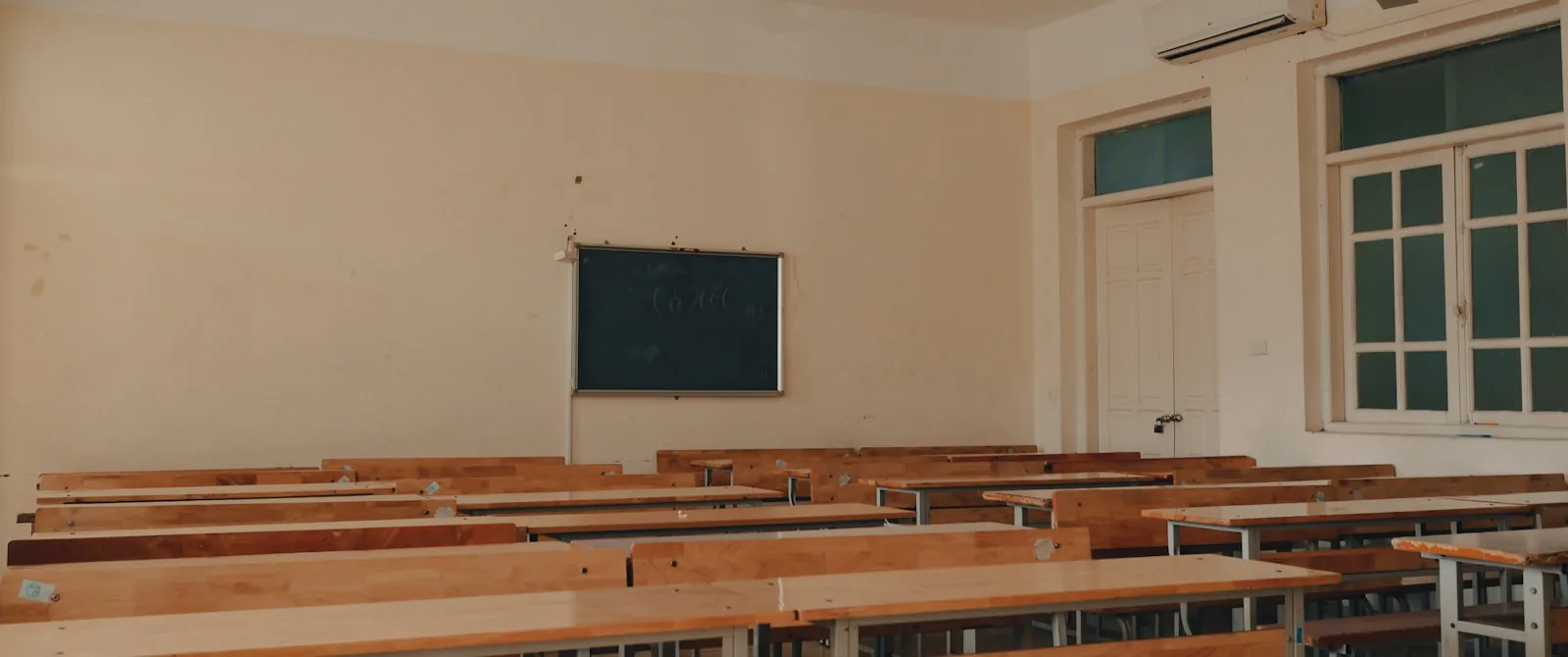
The safest way to share school event photos with parents is to give each family a private gallery containing only their own child. The alternative, one shared folder or link sent to everyone, exposes every child in the school at once. Per-family delivery keeps consent decisions enforceable after the shoot. It also removes the most common complaint school photographers face.
School work carries a duty that wedding and corporate work does not. The subjects are children. The people who gave consent are not the people in the frame. One forwarded link can turn a routine class photo into a safeguarding problem. Despite all of that, the default delivery method across much of the industry is still a single shared folder.
This guide covers what regulators have already acted on, what parents actually expect, and how to build a workflow where each family sees only their own child.
Key takeaways
- ✓Sending a class photo to parents has already been found to breach data protection law when one family's restriction was not honoured.
- ✓Nine in ten parents already restrict who sees photos of their own child, so a school-wide folder asks them to accept a looser standard than they set themselves.
- ✓Get granular consent before the shoot, recording purpose, retention, and how to withdraw.
- ✓Deliver per family, not per class, so access is tied to a family rather than to a forwardable link.
- ✓Plan for withdrawal, because a parent who changes their mind after delivery is the most likely complaint you will receive.
A class photo shared with parents has already been ruled a breach
In March 2020 the UK's Information Commissioner's Office published warnings it had issued to two primary schools. Both concerned the handling of children's images.
The first involved a primary school in Cheshire. It sent a class photograph to a local newspaper, which published it. The adoptive parents of two children in that photograph had already refused consent for images to be shared via any media.
Now consider the second case, which is the one school photographers should study. A primary school in Humberside sent a class photograph to parents. The adoptive parent of one child complained that this raised safeguarding issues for her daughter. It also contravened the consent form she had signed, which stated that no photographs of her daughter were to be used outside the school. In both cases the ICO found breaches of the GDPR. These included Article 5(1)(a) on lawful and transparent processing, and Article 5(2) on accountability. (Bates Wells, 16 March 2020)
That distinction matters. The Humberside photograph did not leak to the press. It went to parents, the audience it was intended for. Distributing it was itself the problem, because one child in the frame was never supposed to appear in anything that left the school.
The process was the finding, not the intent
In both cases the ICO found the schools had not implemented an appropriate procedure for handling children's images. Nobody was accused of acting maliciously. A workflow that depends on someone remembering which children are restricted will eventually fail. The failure then attaches to the process, not to the person who forgot.
Parents already apply tighter controls than most photographers do
In June 2026 the Data Protection Commission in Ireland and CNIL in France published a joint survey. It covered how parents share content about their children, with over 1,000 parents surveyed in each country. (Data Protection Commission, 30 June 2026)
- 9 out of 10 parents share content about their children only to a restricted audience (DPC and CNIL, 2026).
- 1 in 3 parents share daily or several times a week (DPC and CNIL, 2026).
- In Ireland, 66% of parents identified the risk of their child's image being misused by strangers, and a further 55% are concerned about AI and deepfakes (DPC and CNIL, 2026).
- 40% of parents never or rarely seek their child's consent before sharing content (DPC and CNIL, 2026).
The first figure should change how you deliver. Nine in ten parents already restrict who can see a photo of their own child. Then you hand that same parent a folder holding two hundred other children. You are asking them to accept a looser standard than the one they set for themselves. Their concerns are specific, too: strangers and synthetic media, not vague unease about the internet.

Why the shared folder is the weakest link in the workflow
A single gallery link is easy to send and almost impossible to control afterwards. These are the practical failure points.
- ✓A link travels further than you sent it. Parents forward galleries to grandparents, class group chats, and family abroad. Every hop widens the audience for children whose families never agreed to it.
- ✓You cannot revoke access for one family. When one parent objects, you can take the whole gallery down or leave it up. Neither is a good answer.
- ✓Restricted children are only as protected as your memory. If the safeguard is remembering to remove three specific pupils, it will eventually fail.
- ✓You have no record of who opened what. If a complaint arrives six weeks later, you cannot show which families accessed which images.
- ✓Metadata travels with the files. Camera originals can carry location and device data that has no business reaching a parent group chat.
None of this is unique to schools. It is the structural problem behind most traditional photo delivery problems. It is also why photographers are moving away from delivering galleries through Google Drive. Schools simply raise the cost of getting it wrong.
Which delivery method actually fits a school event
- Open folder or public link. Fine for a public marathon. Wrong for children, because anyone holding the link sees every pupil.
- One password for the whole gallery. Keeps strangers out, but every parent still sees every child. It protects against outsiders, not against over-sharing inside the parent group.
- Per-family access. Each family opens only their own child's photos. This is the only option that matches what a school consent form usually promises.
Get consent right before you pick up the camera
Delivery controls cannot repair a consent process that was vague at the start. NSPCC Learning publishes guidance on photographing and filming children, last updated on 9 July 2026. It is the most directly practical reference for this work. (NSPCC Learning)
- Ask the school for a written brief. It should state what you are photographing and why, so images are taken only for agreed purposes.
- Confirm who holds consent. NSPCC guidance indicates written parental consent for under-16s. For 16- and 17-year-olds, the organisation judges whether parental consent is appropriate.
- Record the specifics. Consent records should capture the purpose, how long images will be kept, and how consent can be withdrawn.
- Use identification that does not single a child out. Badges, stickers, or wristbands can flag non-consented children. NSPCC guidance is explicit that these must not isolate the child.
- Strip location data and metadata before delivery. NSPCC also suggests distance shots, avoiding names alongside images, and reducing resolution to limit repurposing.
- Work from organisational devices. Images of children are personal data under the Data Protection Act 2018. Store them securely and limit access to authorised people.
Ask for granular consent, not a single yes or no
A parent may be happy for their child to appear in a gallery shared with their own family. The same parent may object to a school newsletter, a prospectus, or social media. Consent recorded as one blanket permission cannot express that difference. Splitting it by use is more work once, and far less work every time afterwards.
Deliver to each family, not to the whole school
Once consent is recorded properly, the delivery method has to honour it. That means the unit of delivery should be the family, not the class.
This is what Lenzeit's private event mode is built for. You register families before the event. The system then emails each one a unique access code. That code opens a gallery containing only the photos their own child appears in. Nobody browses the full set, so there is no shared folder to forward. Parents need no app and no account, only the code they were sent. You can see the guest-side flow on how clients receive their photos.
The sorting happens automatically. MagicSort groups every photo by person, so a full sports day becomes per-child galleries without anyone building folders by hand. For the end-to-end sequence, how Lenzeit works walks through upload, sorting, and delivery in order. If you want the plain-language version of face-based sorting, start with what is AI photo sorting.
Some children must not appear in any delivered gallery. FaceLock lets you lock specific faces so those images are never delivered to anyone else. That turns a restriction you would otherwise have to remember into one the workflow enforces. It is precisely the gap the ICO identified in the two school cases.
What to do when a parent withdraws consent after delivery
Most guidance skips this scenario. It is also the one most likely to reach your inbox. A parent agreed before the event and has changed their mind two weeks later. Withdrawal has to be possible, or the consent you collected was never meaningful.
- Acknowledge it in writing the same day. Confirm what you are removing and by when. Speed is most of the reassurance.
- Remove the images at source. Deleting a share link while the files remain in the gallery is not withdrawal.
- Check group and background frames. The child may appear in class shots and wide crowd images, not only in their own gallery.
- Tell the school what you have done. They hold the safeguarding duty and need the same record you do.
- Update your consent record. Note the date, what was withdrawn, and what followed, so the change outlives your memory.
- Confirm completion to the parent. Close the loop explicitly rather than leaving them to assume.
In Lenzeit, photographers can delete or manage events and images at any time from the dashboard. Removal does not depend on contacting support or waiting on anyone else.
A checklist for your next school shoot
- ✓Before: get a written brief from the school stating purpose and scope.
- ✓Before: confirm which children are restricted, and how you will identify them without singling them out.
- ✓Before: agree how families will receive photos, and collect what you need to deliver per family.
- ✓On the day: shoot to the brief, and note any frame you already know will need removing.
- ✓After: strip location data and metadata before anything is delivered.
- ✓After: lock any face that must not appear in a delivered gallery.
- ✓After: deliver per family, with access tied to the family rather than to a forwardable link.
- ✓Ongoing: keep the consent record current, including withdrawals and the action taken.
Conclusion: make the workflow enforce the promise
School photography goes wrong at the delivery step far more often than at the shoot. A regulator has already found that sending a class photograph to parents can be a breach, when one family's restriction is not honoured. Parents themselves already restrict who sees their children's images. The fix is not more care at the end of a long editing day. It is a delivery method where each family receives only their own child, and where restrictions are enforced by the system rather than remembered by a person.